On November 26th, the “Shanghai Jewish Exile Literature Studies” New Books Launch event was held at the Shanghai Jewish Refugees Museum. The event was co-organized by the Center for Chinese Discourse and World Literature Studies at Shanghai International Studies University (SISU), the Shanghai Jewish Refugees Museum, and the Shanghai Institute for Global Governance and Area Studies. As the first session of the lecture series “Shanghai Jewish Exile Literature: Chinese Narratives and Contemporary Echoes,” the event attracted numerous literature researchers, history enthusiasts, and general readers.
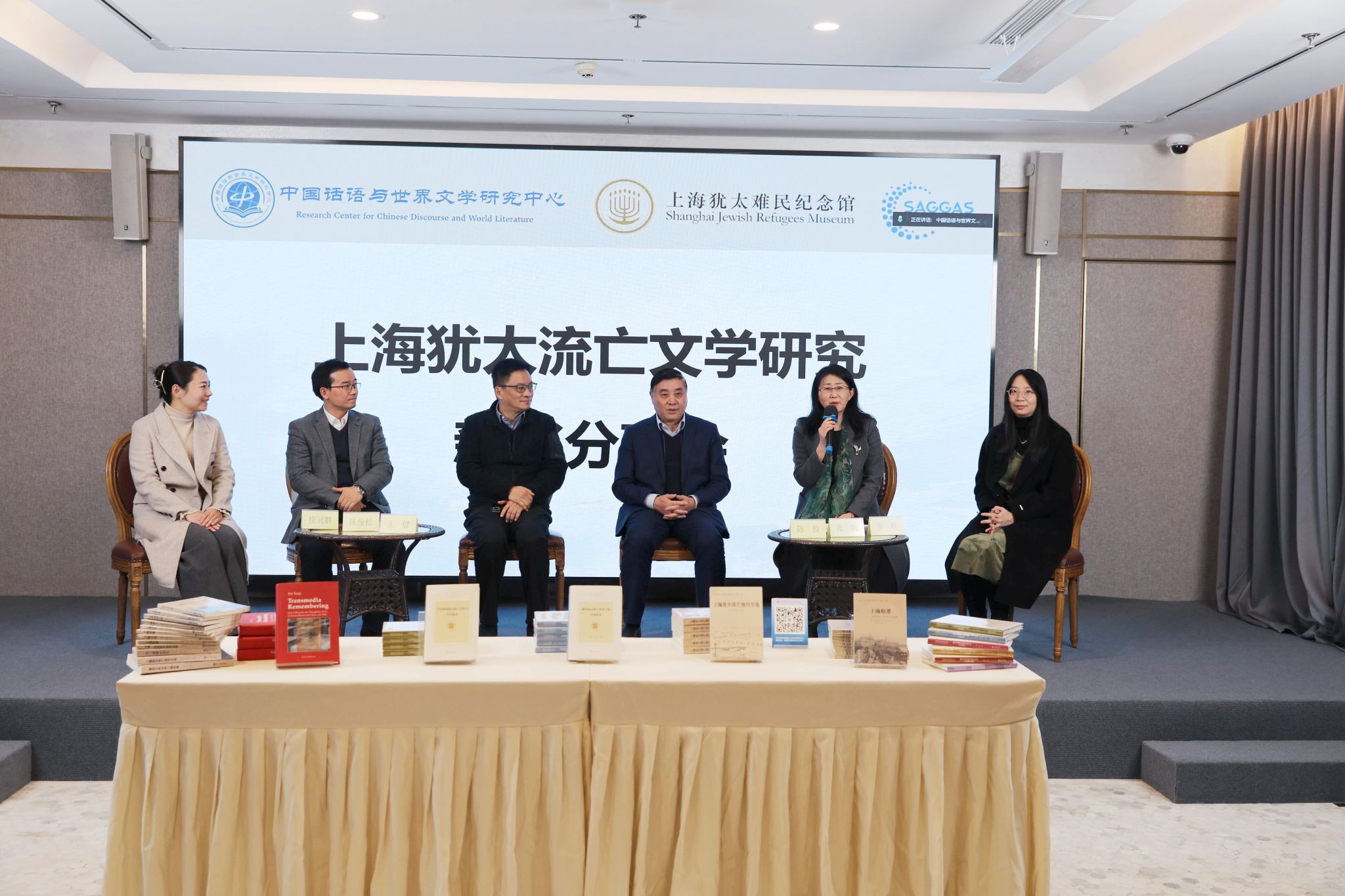
At the Event
The event, through presentations and discussions by young scholars and senior experts, explored the Chinese narrative patterns, cross-cultural adaptation mechanisms within Shanghai Jewish exile literature and cultural activities, and their enlightening significance for contemporary globalization. Distinguished guests included Researcher Wang Jian, Director of the Institute of International Studies at the Shanghai Academy of Social Sciences and Executive Director of the Shanghai Center for Jewish Studies; Chen Jian, Director of the Shanghai Jewish Refugees Museum; and Professor Chen Junsong, Chair of the English Department and head of the literature research team at the School of Foreign Languages, East China Normal University. Presenters included Associate Professor Tang Jie from the European College of Xi'an International Studies University, Lecturer Xu Guanqun from the Applied German Department of Shanghai Institute of Technology, and Assistant Research Fellow Tong Xin from the Center for Chinese Discourse and World Literature Studies at SISU. The event was hosted by Professor Zhang Fan, Dean of the Institute of Literary Studies and Director of the Center for Chinese Discourse and World Literature Studies at SISU.
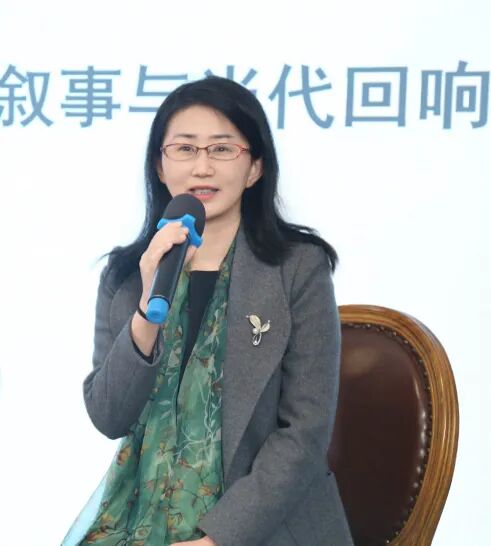
Professor Zhang Fan Speaking
As the chief editor of both the “German-Language Shanghai Novels Translation and Research Series” and the “Chinese Discourse and World Literature Research Series,” Professor Zhang Fan first introduced the publishing purposes of the two series and highlighted the five translations and monographs related to Shanghai Jewish exile included within them. She noted that the “German-Language Shanghai Novels Translation and Research Series” (published by World Affairs Press) comprises 12 volumes, covering genres such as German travelogues and novels, Jewish exile autobiographies, revolutionary war novels, crime fiction, adventure stories, children's literature, and family sagas. Most of these works were created in the 1930s and 1940s, vividly depicting the social landscape and cultural atmosphere of old Shanghai. Translations related to the Jewish exile theme include Shanghai Ticket – The Exile and Refuge of a Viennese Woman (translated by Tang Jie and Zhang Fan) and Selected Writings from Shanghai Jewish Exile Periodicals (edited by Zhang Fan and Xu Guanqun). The German-language authors of these novels carried their Shanghai memories and Haipai (Shanghai-style) culture into the world, making their works important historical documents and valuable for both academic research and historical records.

German-Language Shanghai Novels Translation and Research Series
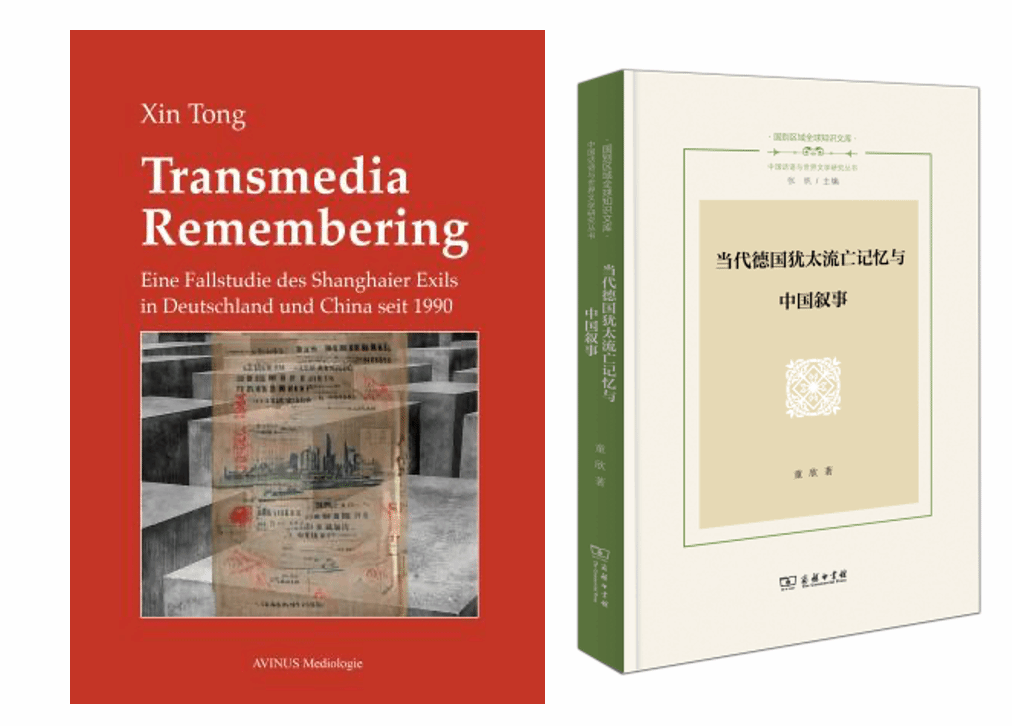
The “Chinese Discourse and World Literature Research Series” (published by The Commercial Press) aims to explore the construction of narratives about China within world literature and its production mechanisms. It seeks to methodologically reflect on the Euro-American paradigms while constructing a Chinese knowledge community, and contribute to exploring new methods, perspectives, and approaches in world literature studies. The first installment of the series consists of 10 volumes, focusing on Chinese narratives in German-language literature. It covers German left-wing literature, exile literature, travel writing, children's literature, and literature by Chinese diaspora authors, systematically studying the exotic depictions and image constructions of China by different German groups across various periods from multiple angles. This analysis aims to understand the construction and evolution of German cultural perceptions of China's image and even the concept of China itself. Monographs in the series related to the Jewish exile theme include Chinese Stories in the Writings of German-Language Jewish Exiles (edited by Qi Jiafu and Xu Guanqun), Contemporary German Memory of Jewish Exile and Chinese Narratives (by Tong Xin), and Spatial Narratives and Images of China in Shanghai Jewish Exile Periodicals (by Xu Guanqun). These works delve into the historical context, employing theories such as cultural memory and spatial narrative to analyze how Germany has reshaped the memory of Jewish exile in China through diverse media.
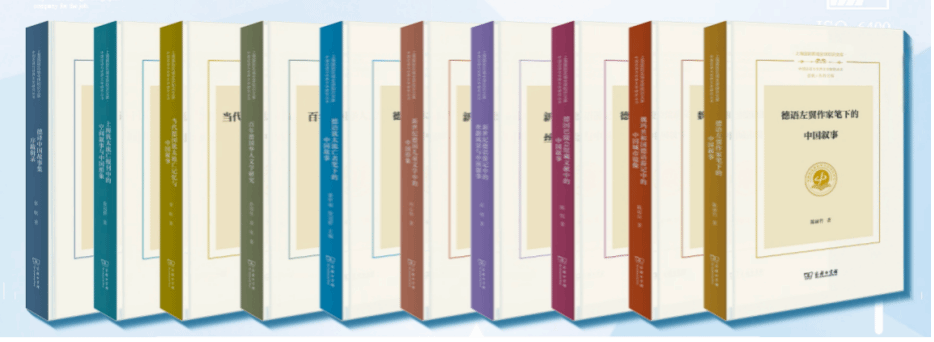
German-Language Shanghai Novels Translation and Research Series
During the presentation session, Associate Professor Tang Jie shared the main content of her translated work Shanghai Ticket – The Exile and Refuge of a Viennese Woman. This novel is an autobiography by Austrian Jewish refugee Franziska Taussig, based on her exile experience in Shanghai. In her work, Taussig meticulously portrays a group portrait of Jewish refugees, recounts the survival stories of people from various nations in Shanghai, and sketches a multicultural picture of Shanghai characterized by a “blend of Chinese and foreign elements.” Tang Jie pointed out that this autobiography is not merely personal memory but a precious historical testimony, reflecting the tolerance and goodwill Shanghai demonstrated during turbulent times. Looking back at this history is not only for commemoration but also to understand the profound implications of the “community with a shared future for mankind.”
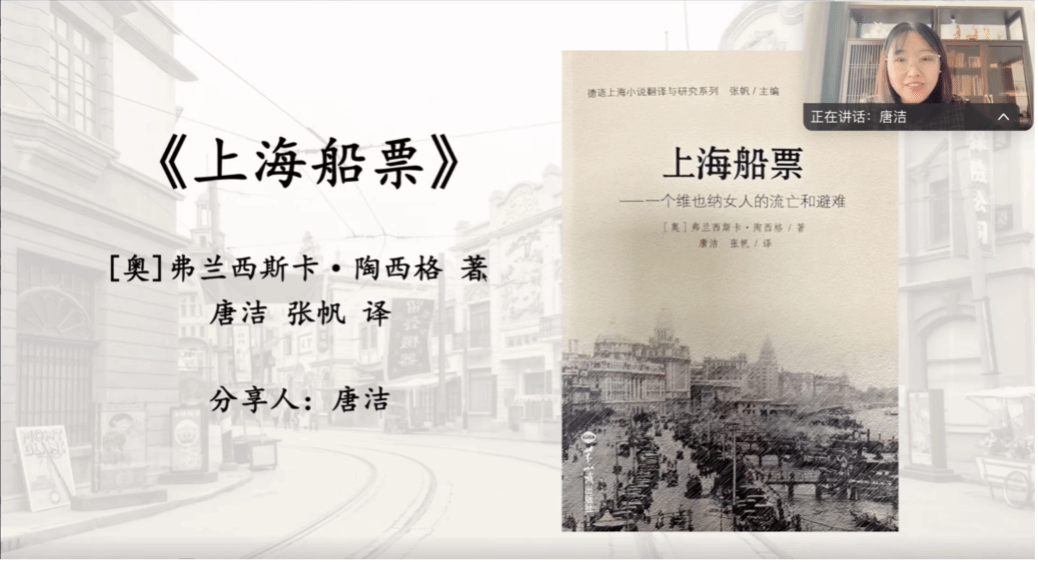
Associate Professor Tang Jie Giving a Speech
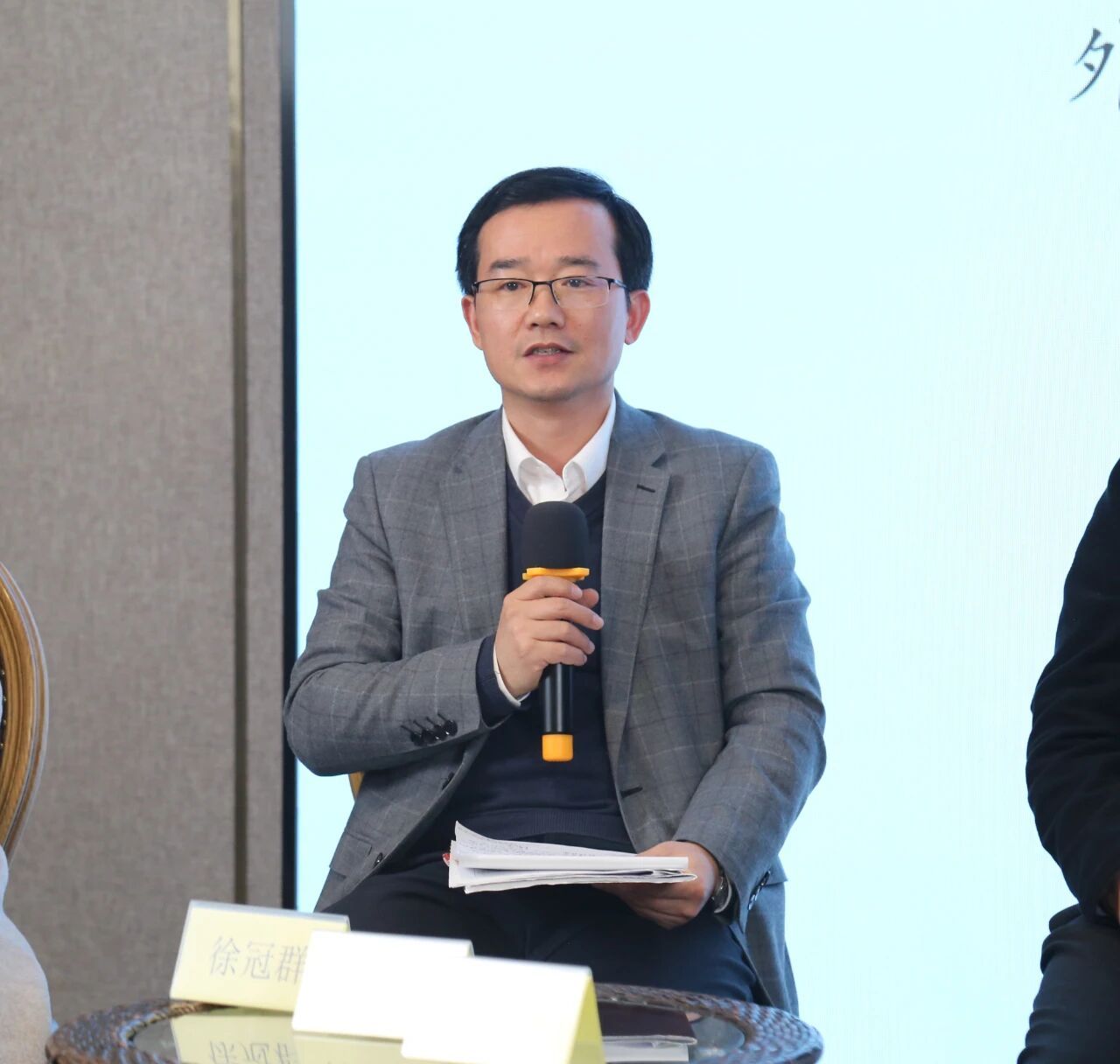
Lecturer Xu Guanqun, who has long been engaged in researching and compiling literature from Shanghai Jewish exile periodicals, shared her insights based on Selected Writings from Shanghai Jewish Exile Periodicals, Chinese Stories in the Writings of German-Language Jewish Exiles, and her forthcoming monograph Spatial Narratives and Images of China in Shanghai Jewish Exile Periodicals. She emphasized that periodical literature possesses “immediacy” and “local specificity,” capable of genuinely reflecting the feelings and observations of exiles at specific moments, thus serving as an important medium for reconstructing the historical scene. Through the daily writings of representative Jewish exiles such as psychologist and publisher Bruno Schindler, doctor and writer Max Mohr, sinologist Willy Tonn, playwright Friedrich Wolf, and deaf painter David Ludwig Bloch, one can perceive and interpret their cross-cultural understanding and empathy towards Chinese society, culture, and people.
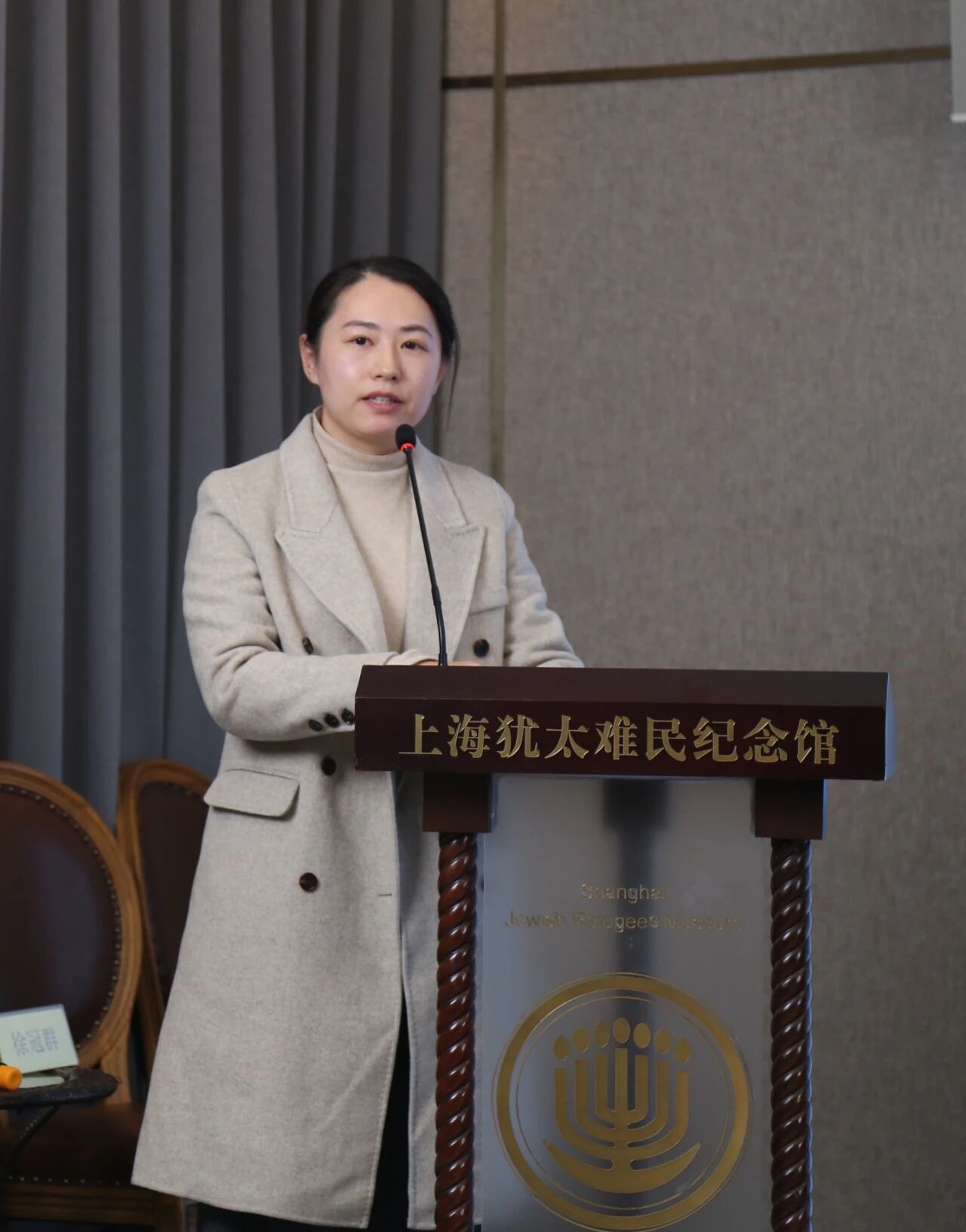
Lecturer Xu Guangqun Giving a Speech
Assistant Research Fellow Tong Xin presented her two monographs: Transmedia Remembering: Eine Fallstudie des Shanghaier Exils in Deutschland und China seit 1990 and Contemporary German Memory of Jewish Exile and Chinese Narratives. Using cultural memory theory as a framework, she explored how Germany has reshaped this “Chinese narrative” through diverse media. From the Chinese poetry and Shanghai writings of Jewish exiles, to German avant-garde director Ulrike Ottinger's cinematic search for traces of the Shanghai Ghetto, to Hamburg's contemporary reconstruction of exile memory through music, exhibitions, and urban spaces, the analysis of these cases challenges Western-centric historical discourse while avoiding nationalist narrative traps. It attempts to reposition China's complex role in this history amidst the intertwining of globalization and local memory.
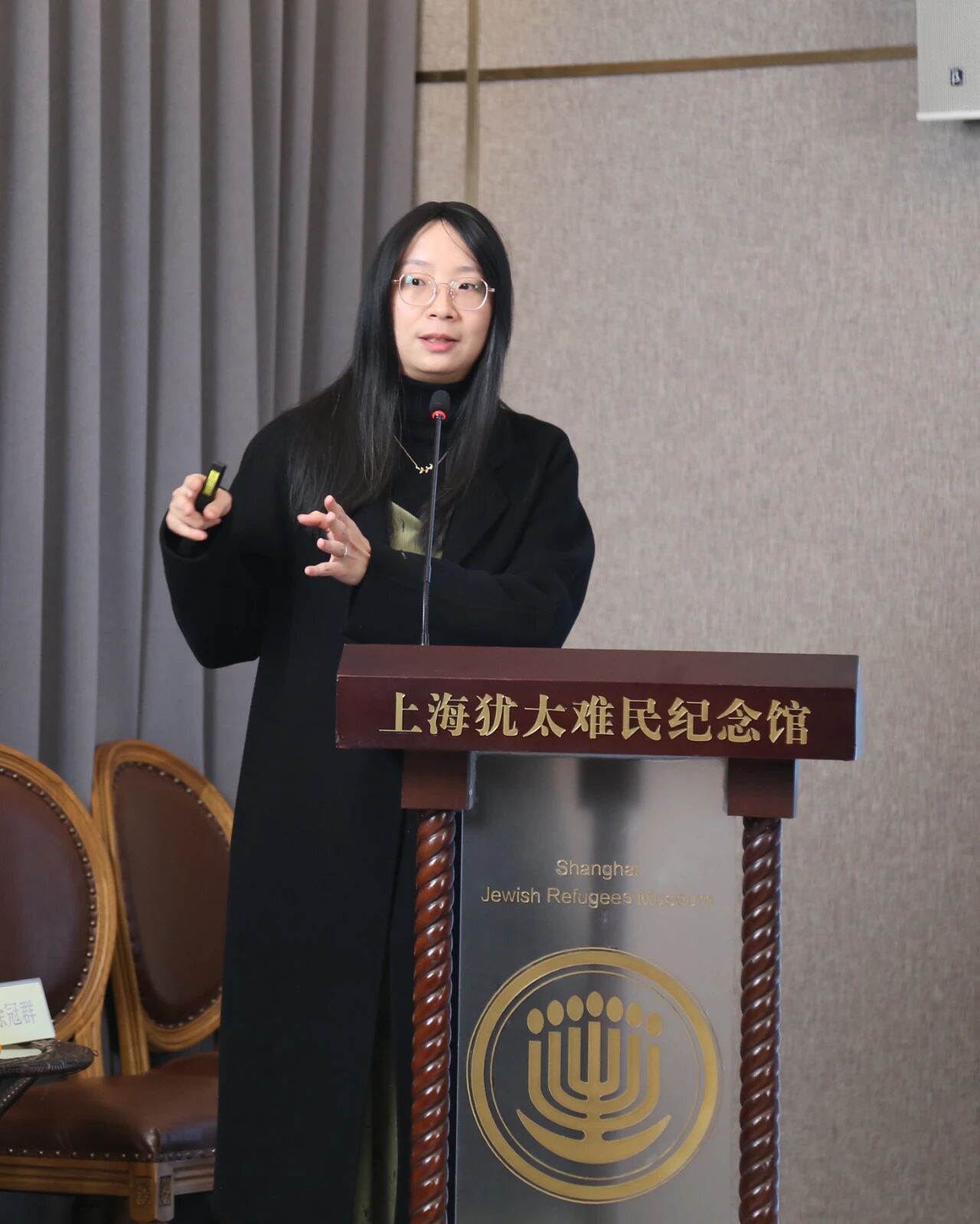
Assistant Research Fellow Tong Xin Giving a Speech
At the expert commentary session, Researcher Wang Jian, from the perspective of the interweaving of history and literature, elaborated on the contemporary significance of Shanghai Jewish refugee studies. He commended Professor Zhang Fan's team for their research approach from a literary angle, noting that traditional historical research often focuses on macro frameworks and historical verification, while literary narratives, with their delicate brushstrokes, restore the life details and emotional experiences of individuals within history, greatly enriching the historical “granularity.” He emphasized that since the main body of Shanghai Jewish refugees came from German-speaking countries, the excavation and translation of German-language documents hold irreplaceable value. Jewish refugees not only sought survival in Shanghai but also experienced deep-level integration with local Shanghai culture. Literature, therefore, is not merely a supplement to history but also a bridge for civilizational dialogue, offering important insights for how the contemporary international community can promote equal and diverse cultural exchanges.
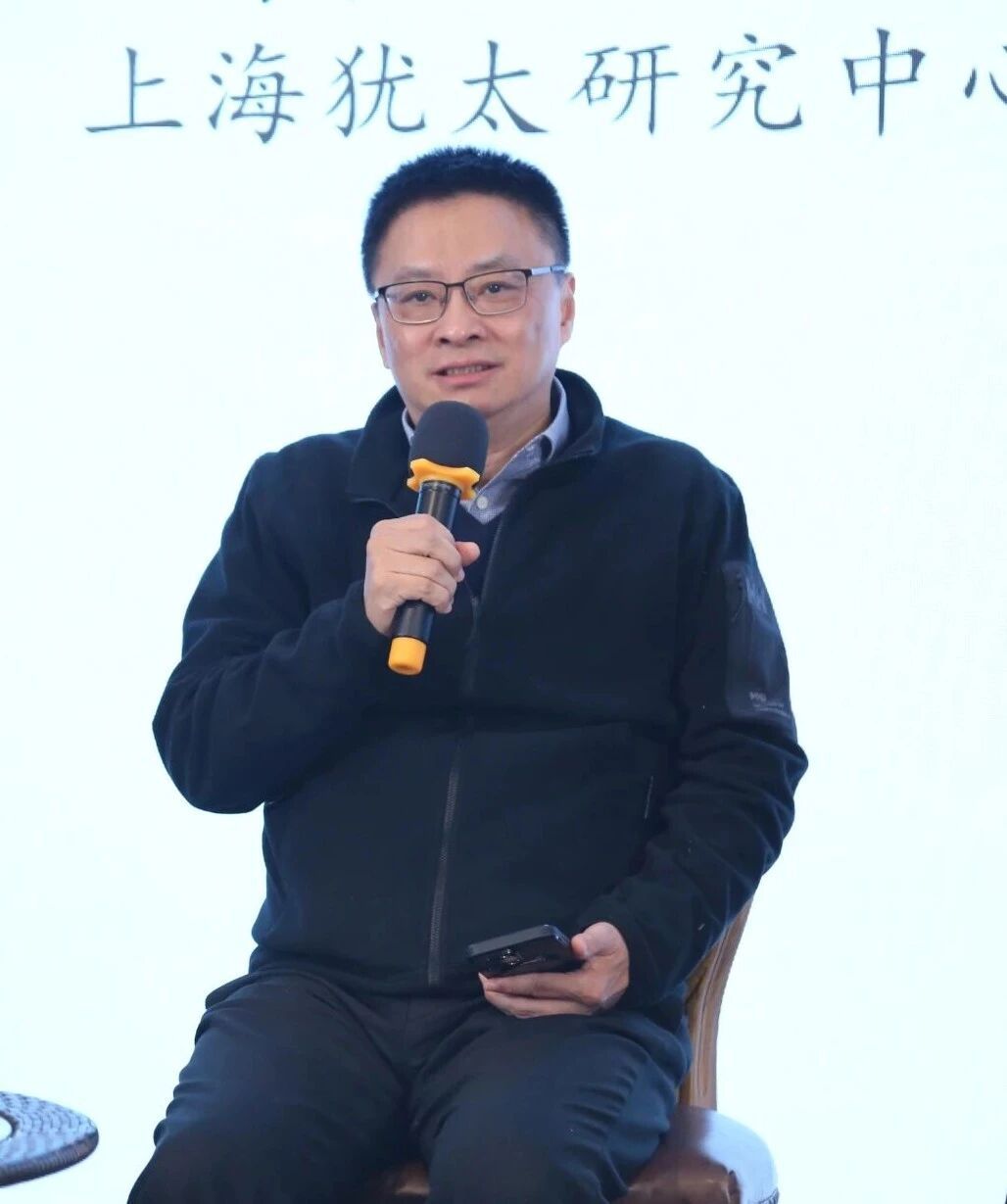
Researcher Wang Jian Sharing Insights
Director Chen Jian of the Shanghai Jewish Refugees Museum expressed full affirmation for the fruitful achievements made by Professor Zhang Fan's academic team. He pointed out that this field is attracting increasing attention from young scholars, demonstrating vibrant vitality and broad development prospects. Given the strategic significance of research on Jewish history and mutual learning among civilizations, he encouraged young scholars to stay committed to their original aspirations and persevere, contributing to national development while promoting their personal academic growth. He noted that as the only museum of its kind globally with a “rescue” theme, the museum's current collection of historical materials is still insufficient to fully present the complete history of over 20,000 Jewish refugees during their decade-long stay in Shanghai. He called for joint efforts from the academic community to enrich the museum's collection through multilingual, multi-genre, and interdisciplinary research, enhancing the persuasiveness and impact of exhibitions, thereby enabling a more comprehensive presentation and transmission of this history.
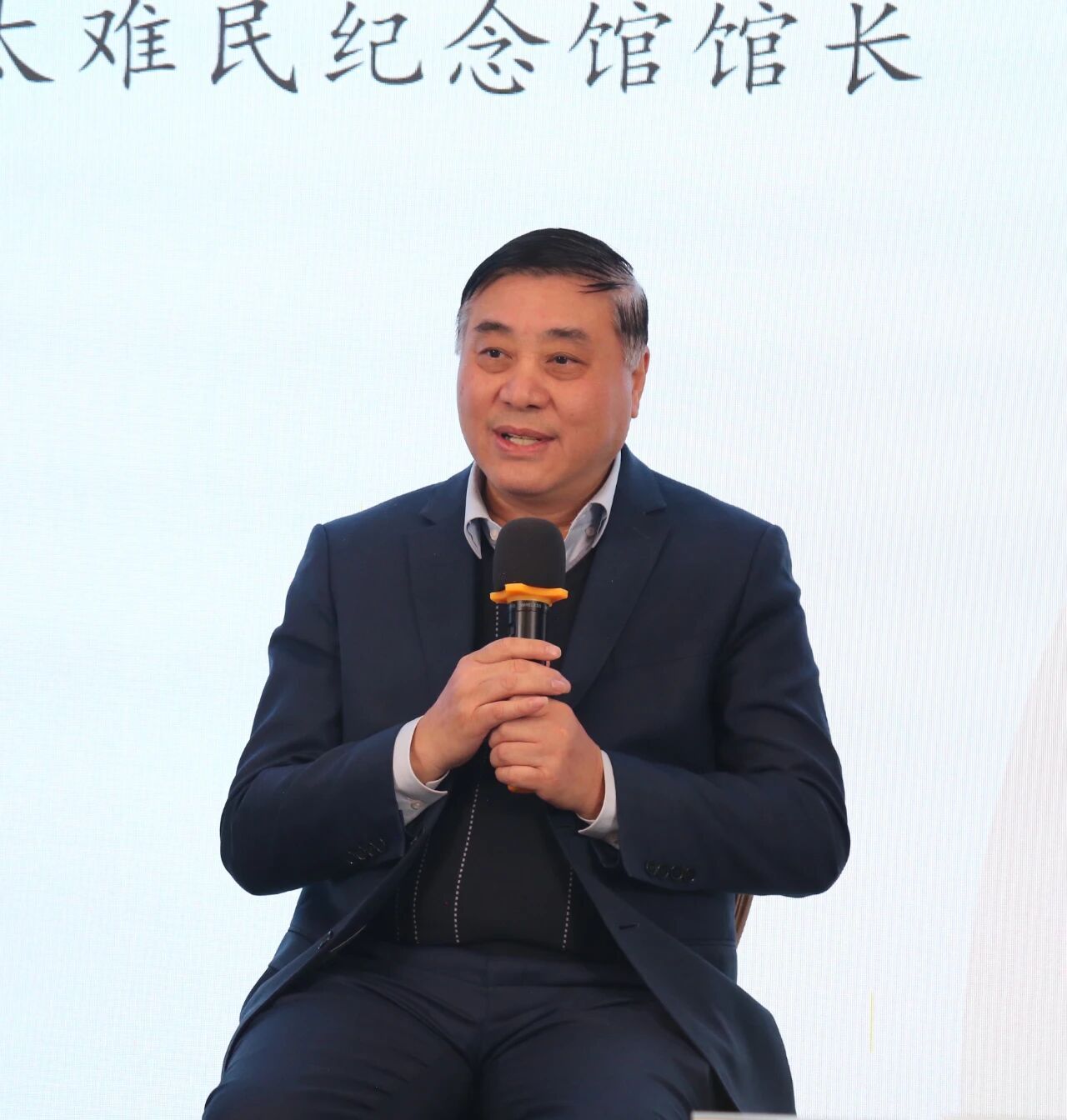
Director Chen Jian Sharing Insights
Professor Chen Junsong offered high praise using three keywords: “novelty, breadth, and comprehensiveness.” He believed these academic achievements feature novel materials, with the research scope extending from the last century to the present, making extensive use of newly discovered historical sources; broad coverage, encompassing multiple text types such as memoirs, novels, periodicals, films, and music, spanning both fictional and non-fictional fields; and comprehensive perspectives, integrating research methods from comparative literature, spatial criticism, cultural memory, and transmedia narrative, demonstrating multidimensional academic innovation. He pointed out that, as part of the city's cultural lineage, Shanghai Jewish exile literature continuously deepens the connection between Shanghai and literature. The current relevant historical documents and literature are primarily in German and English, while also involving materials in French, Russian, Japanese, and Chinese, forming a cross-cultural textual corpus awaiting deeper exploration. He looks forward to sustained and deepened cooperation within the academic community to jointly promote the literary writing and memory reconstruction of this history.
Professor Chen Junsong Sharing Insights
During the final Q&A session, readers engaged in in-depth exchanges with speakers. This event was a concentrated presentation of the latest research achievements on Shanghai Jewish exile literature by the Center for Chinese Discourse and World Literature Studies, also building a bridge for in-depth dialogue between domestic and international scholars, young researchers, and readers. These achievements, while adhering to the consistent stance of Chinese academia in cross-civilizational dialogue, also focus on critically absorbing heterogeneous cultures, expanding the breadth and depth of research on the connection between Jewish exile literature and Shanghai's urban culture. It provides valuable reference for interdisciplinary dialogue among literature, history, Jewish studies, and other fields, showcasing the innovative momentum in the construction of China's academic discourse system in the new era.
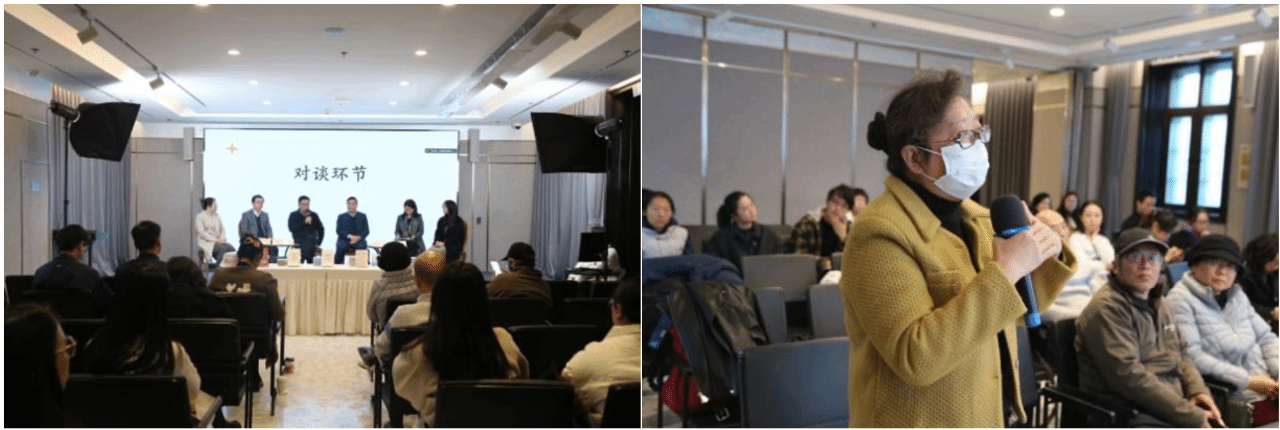
Q&A Session
Against the backdrop of the 80th anniversary of the victory of the Chinese People's War of Resistance Against Japanese Aggression and the World Anti-Fascist War, this event highlights its practical significance even more. The Shanghai Jewish Refugees Museum, as the event venue, preserves precious historical artifacts and documentary materials, safeguarding the survival memories of over 20,000 Jewish refugees in Shanghai during World War II, and showcasing a historical episode of the Chinese people and Jewish exiles overcoming hardships together, engaging in mutual learning and dialogue between civilizations. In the future, the Center for Chinese Discourse and World Literature Studies will continue to collaborate with academic peers and the Shanghai Jewish Refugees Museum to build an open academic platform, jointly writing and transmitting this historical memory that transcends national and ethnic boundaries.
This article is reposted from the Center for Chinese Discourse and World Literature Studies.
 Contact Us
 Become a Volunteer




 021-55133186
 info@shjews.com
 62 Changyang Road, Hongkou District