On December 5, the third installment of the public lecture series “Shanghai Jewish Exile Literature: Chinese Narratives and Contemporary Echoes,” jointly organized by the Research Center for Chinese Discourse and World Literature at Shanghai International Studies University, the Shanghai Jewish Refugees Museum, and Shanghai Academy of Global Governance & Area Studies, featured the lecture “Shanghai's Urban Space in German-Language Jewish Exile Publications”. The lecture was delivered by Xu Guanqun, lecturer in the School of Foreign Languages at Shanghai Institute of Technology, and moderated by Hu Wenting, Associate Professor at the Center for Chinese Discourse and World Literature Studies, Shanghai International Studies University.
The event drew enthusiastic participation from a diverse audience, including members of the public with a keen interest in the subject, citizens who had personal connections to Jewish refugee history, as well as young scholars and students from universities. Guided by Xu Guanqun, attendees engaged in profound discussions about Shanghai's urban memory as depicted in these exile publications. The session featured lively exchange of ideas, collectively sketching a humanistic portrait of Shanghai that transcends time and space.
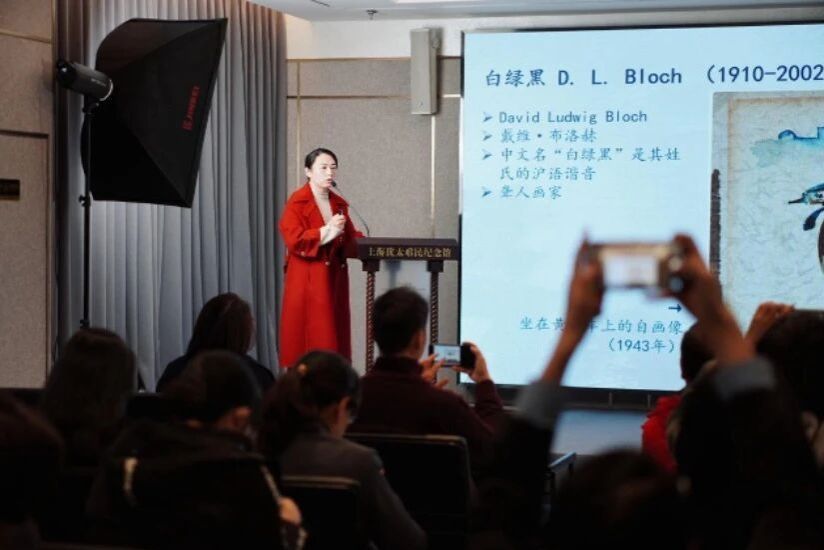
This lecture focused on German-language newspapers established by Jewish refugees living in Shanghai during the 1930s and 1940s, examining how these publications documented, shaped, and imagined Shanghai's urban space. Xu Guanqun first outlined the historical context: Between 1933 and the end of World War II, approximately 25,000 European Jewish refugees sought refuge in Shanghai. Among them were intellectuals, journalists, and artists who swiftly established diverse German-language publications upon arrival, forming a vibrant exile cultural circle. Statistics indicate that between 1939 and 1945, Shanghai saw the emergence of over 50 exile publications in German, English, Yiddish, and other languages, with German-language papers exceeding 30 types. These publications took forms including dailies, weeklies, and monthlies, covering news, community information, literary works, and specialized medical knowledge.
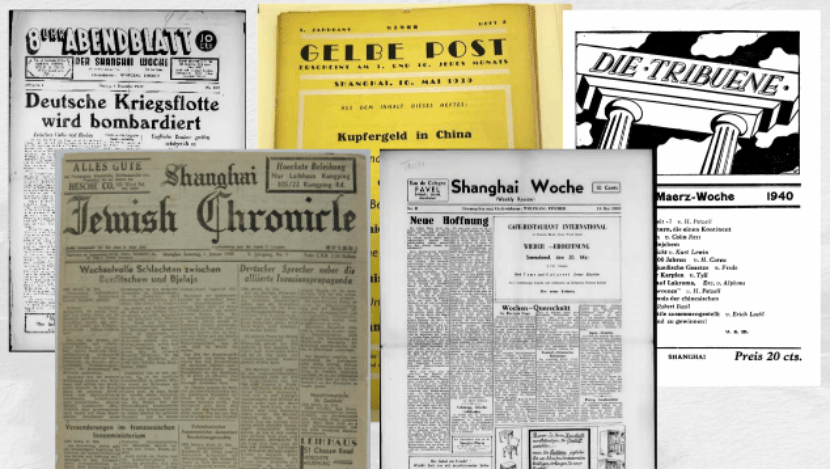
Xu Guanqun detailed the founding processes and historical significance of representative publications like Shanghai Woche, 8-Uhr-Abendblatt, Gelbe Post, Shanghai Jewish Chronicle, and Die Tribüne. She emphasized that these publications served not only as tools for information dissemination but also as vital platforms for exiles to express emotions, maintain identity, and document daily life.
Subsequently, Xu Guanqun selected articles by exiled intellectuals such as Adolf Josef Storfer, Willy Tonn, and Alfred Dreifuss for analysis, revealing how they observed and interpreted China. For instance, Storfer celebrated the resilience of Chinese laborers in “Hats Off to the Coolies”; Willy Tonn reflected on the differences between Confucian culture and European modernity in “East and West”; Dreifuss, through art criticism, presented how Jewish painter D. L. Bloch documented Shanghai's underclass life through woodblock prints. These works revealed both the cultural scrutiny of Western intellectuals and their empathy and understanding as fellow sufferers.
The lecture's core section explored Jewish exiles' literary representations of Shanghai's urban spaces. Xu Guanqun categorized spatial writings in periodicals into four types: regional spaces, linear spaces, fluid spaces, and heterotopic fields. The lecture focused on two major regional spaces: Hongkou District and the shantytowns and refugee camps.
The lecture noted that Hongkou was the primary and most familiar settlement area for Jewish refugees at the time, making it the core urban space repeatedly depicted and interpreted in exile publications. Newspapers documented the war-scarred scenes refugees encountered upon arriving in Hongkou and extensively narrated the Jewish refugees' own reshaping and transformation of the Hongkou space. Some literary works presented the complex picture of overlapping diverse social spaces in Hongkou. Xu Guanqun specifically cited Kurt Lewin's poem “Hongkou” to demonstrate Shanghai's complexity as a multicultural crossroads, revealing the overlapping and conflicting layers of social spaces. Additionally, the publications contained utopian visions for Hongkou's future, reflecting the psychological quest for identity and belonging among exiles through cultural construction.
The lecture specifically noted that Jewish exile publications paid considerable attention to China's marginalized living spaces, such as shantytowns and refugee camps. Jewish exiles' writings on these areas not only documented China's social realities but also reflected their own identity anxieties as “marginalized individuals.” Through articles like Julius R. Kaim's “Visiting a Chinese Refugee Camp,” exiles observed the suffering of China's marginalized populace while also sensing the resilience and hope evident in Chinese society. This image of China viewed through an “other's” perspective is imbued with profound humanistic concern.
At the lecture's conclusion, Associate Professor Hu Wenting delivered an insightful summary. She highlighted the dual significance of Jewish exile publications: first, as vehicles for cultural self-awareness and identity preservation among Jewish refugees, reflecting their concern for society's underprivileged and commitment to their own culture; second, as historical fragments of Shanghai that should be integrated into narratives of modern Chinese and global history, serving as invaluable texts for cross-cultural research. Hu Wenting emphasized that by returning to the everyday through “micro-narratives,” we can more vividly understand the interaction between individuals and culture within history, thereby achieving a research shift that reveals the grand in the ordinary.
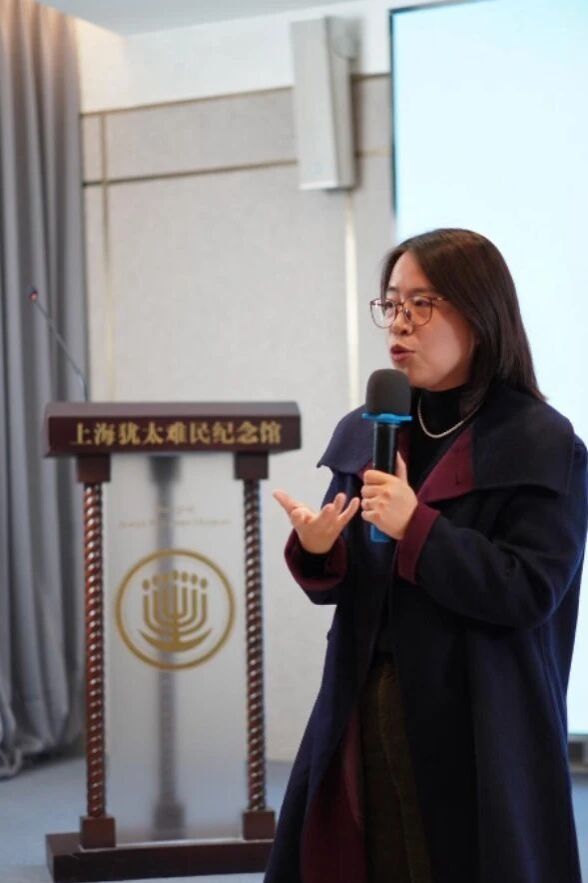
Host Hu Wenting
During the Q&A session, audience actively posed questions covering historical details, cultural comparisons, and contemporary implications. Attendees expressed strong approval of the lecture, affirming the profound historical significance and academic value of such research.
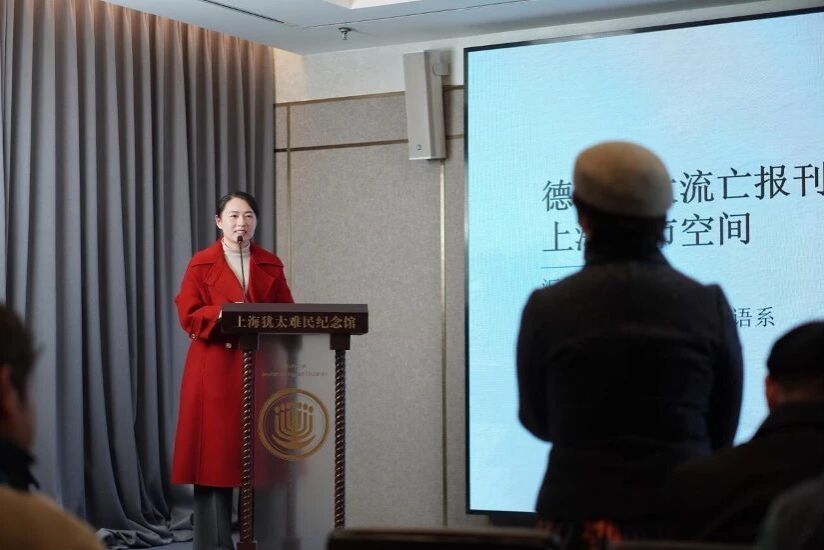
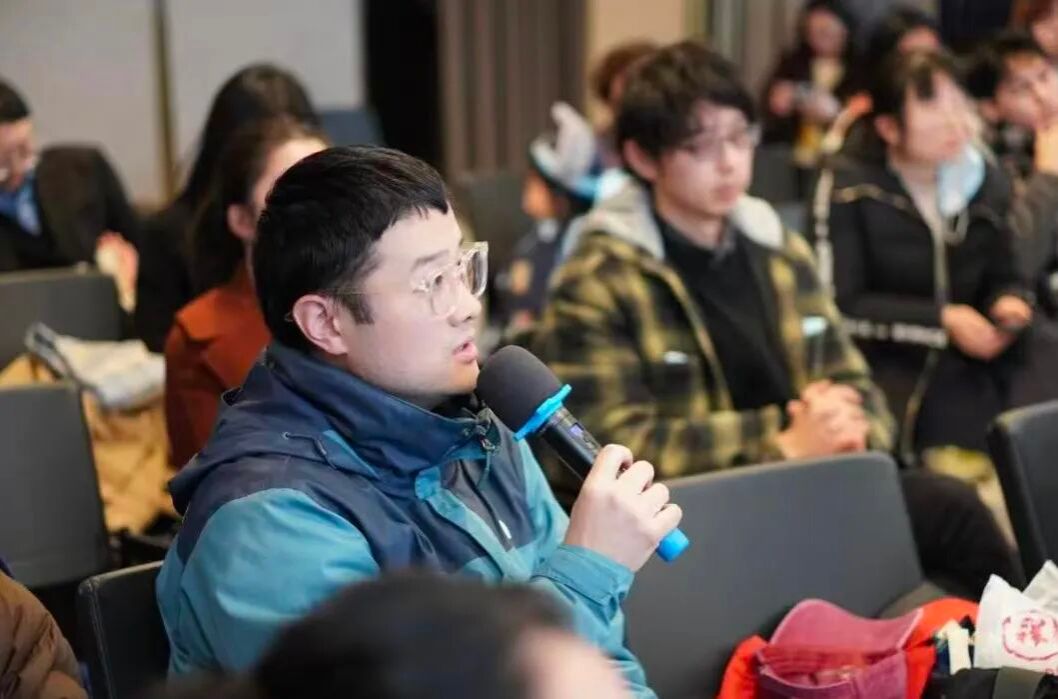
Q&A Session
This article is reposted from the Center for Chinese Discourse and World Literature Studies.
 Contact Us
 Become a Volunteer




 021-55133186
 info@shjews.com
 62 Changyang Road, Hongkou District