On December 18, 2025, the sixth session of the “Shanghai Jewish Exile Literature: Chinese Narratives and Contemporary Echoes” lecture series—“S. An-ski's Yiddish Drama and Its Shanghai Performance”—was successfully held at the Shanghai Jewish Refugees Museum. This session was co-organized by the Center for Chinese Discourse and World Literature Studies at Shanghai International Studies University, the Shanghai Jewish Refugees Museum, and the Shanghai Academy of Global Governance and Area Studies. The lecture was delivered by Bao Anruo, Assistant Research Professor at the Institute of Jewish Studies, Shanghai International Studies University, and hosted by Tong Xin, Assistant Research Professor at the Center for Chinese Discourse and World Literature Studies. It attracted numerous scholars and citizens interested in Shanghai's modern history and Eastern European Jewish literature and culture.
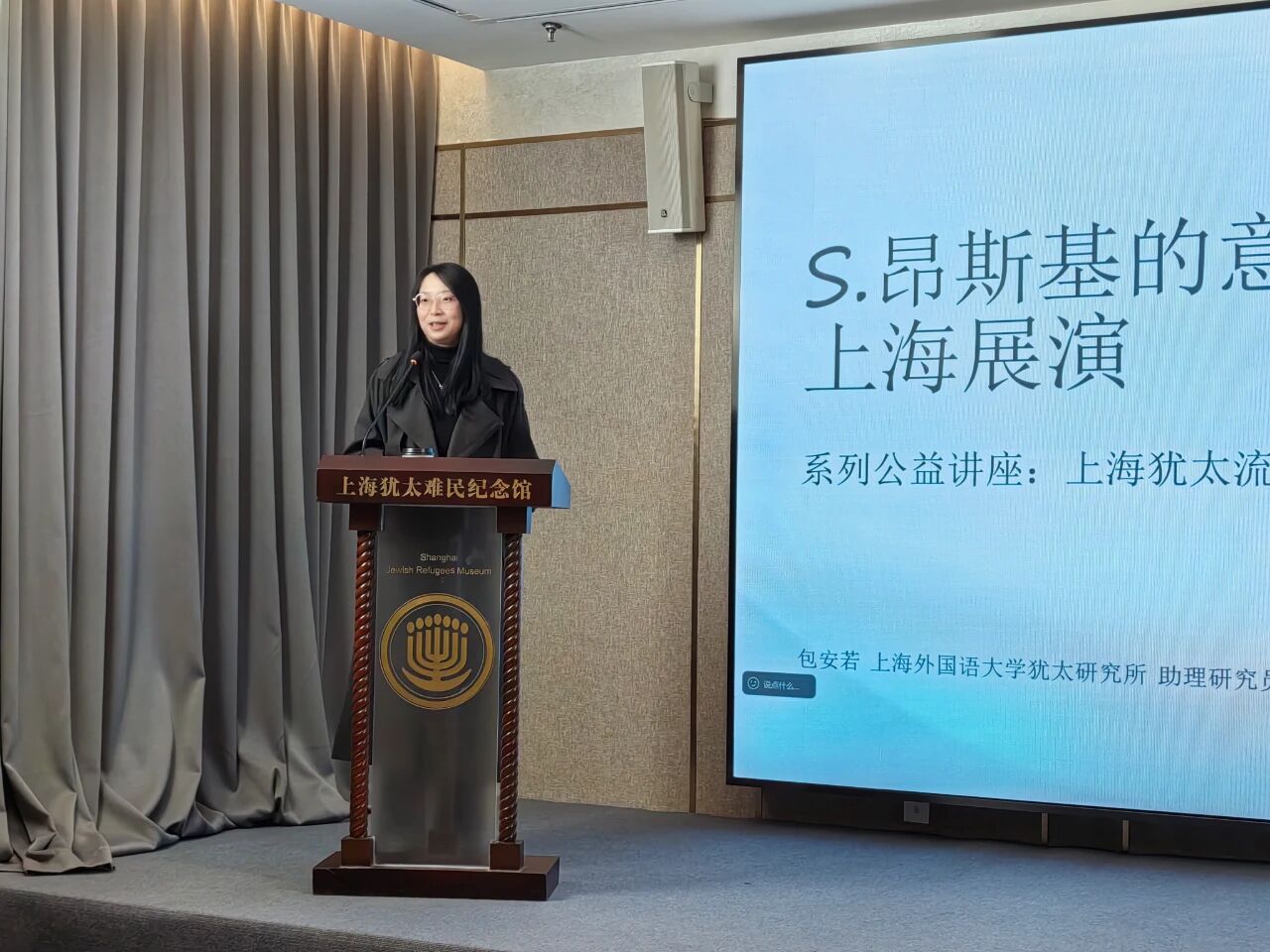
Host Tong Xin
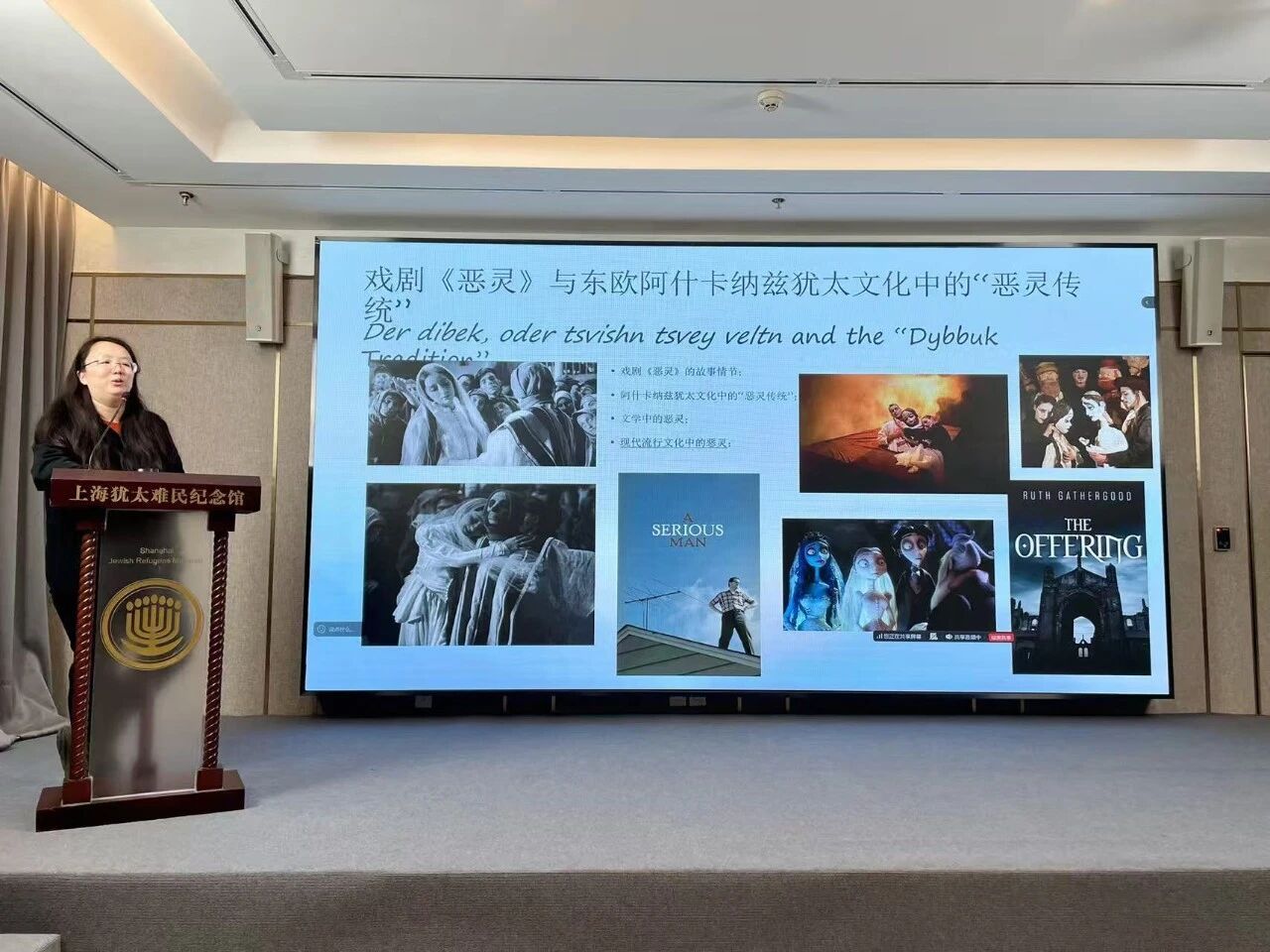
The lecture unfolded through five progressively sections: Origins, Yiddish Language and Literature, S. An-ski and the Drama The Dybbuk, the “Dybbuk” Tradition in Eastern European Ashkenazi Culture and Its Contemporary Echoes, and the special performance of the play in Shanghai in 1941.
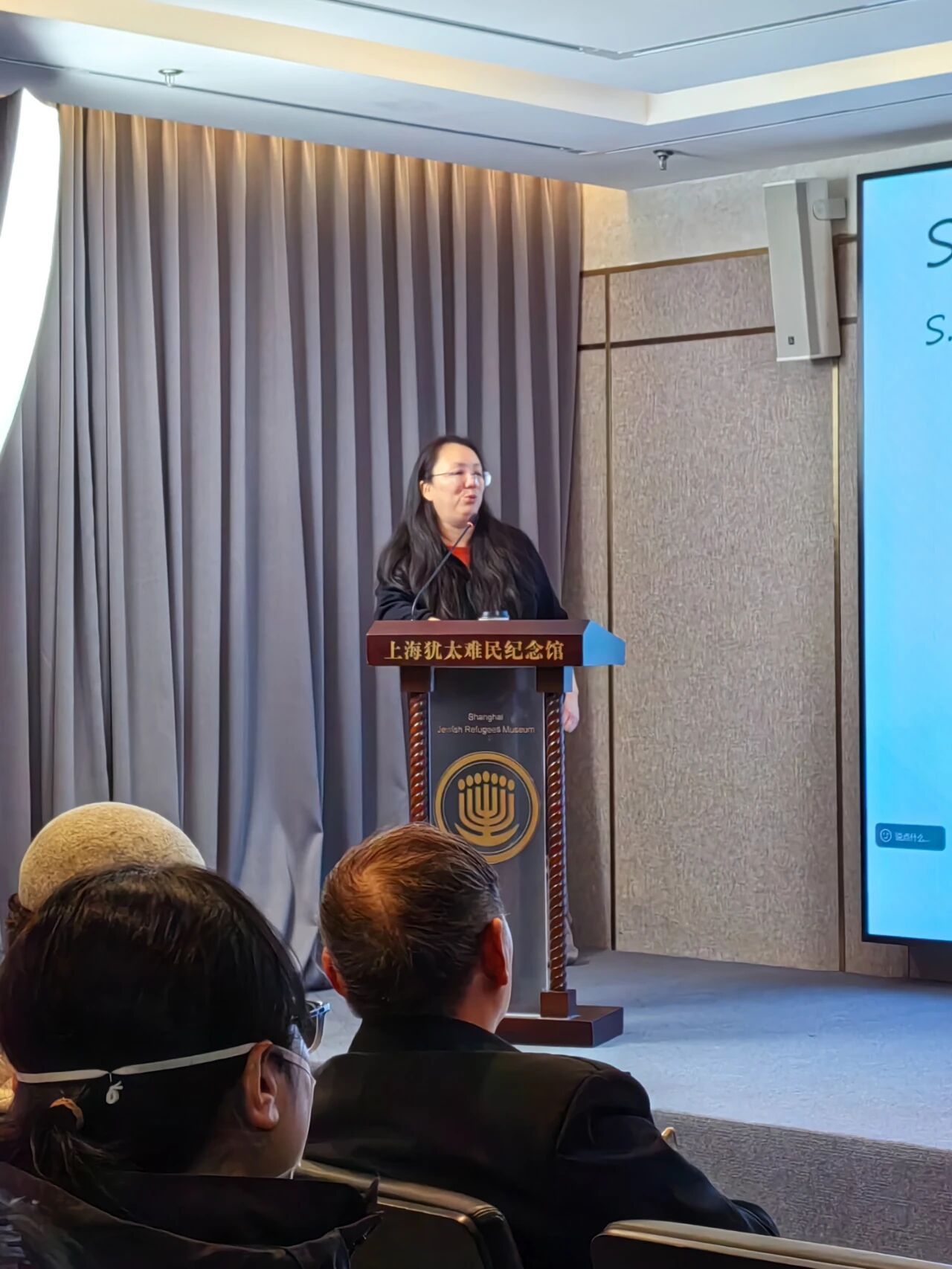
Speaker Bao Anruo
At the outset, Bao Anruo traced the life journey of the Israeli sinologist Irene Eber (1929–2019), framing her scholarly path that traversed trauma and rebirth. As a Holocaust survivor, Eber devoted her later years to discovering and collating historical materials related to Shanghai Jewish refugees. It was through her meticulous work that the long-buried episode of the 1941 Shanghai performance of the renowned Yiddish drama The Dybbuk resurfaced in contemporary academic discourse. This origin story not only established the historical and emotional foundation for the lecture but also revealed how academic research serves as a vital link in preserving collective memory and connecting diasporic histories.
Considering the relative unfamiliarity of the domestic audience with the Yiddish language, Bao Anruo dedicated a section to briefly outline the development of this language and its literature. Yiddish, which formed around the 10th century AD, is a Germanic language incorporating elements of Hebrew-Aramaic, Slavic, and Romance languages. For a long time, it coexisted with Hebrew as the vernacular of Eastern European Ashkenazi Jewish communities. Modern Yiddish literature emerged in the latter half of the 19th century, created by intellectuals of the Haskalah (Jewish Enlightenment) movement to educate the masses. It rapidly evolved into the most prolific and vibrant branch of modern Jewish culture, profoundly shaping the spiritual world of modern Jews.
Against this backdrop, S. An-ski's The Dybbuk came into being. Bao Anruo detailed the life of this writer and folklorist, particularly focusing on his ethnographic expeditions in Eastern European Jewish shtetlekhs(little Jewish towns in Eastern Europe) from 1912 to 1914. The wealth of folktales, songs, and images collected during these journeys provided fertile ground for the creation of The Dybbuk The play tells the tragic story of a couple deeply in love but unable to be united: the male protagonist, to win his beloved's heart, resorts to transforming himself into a “dybbuk,” attempting to possess her body. Since its premiere, The Dybbuk has captivated audiences with its intense emotional drama and mystical elements, becoming a landmark work in Yiddish theater and continuously adapted and restaged.
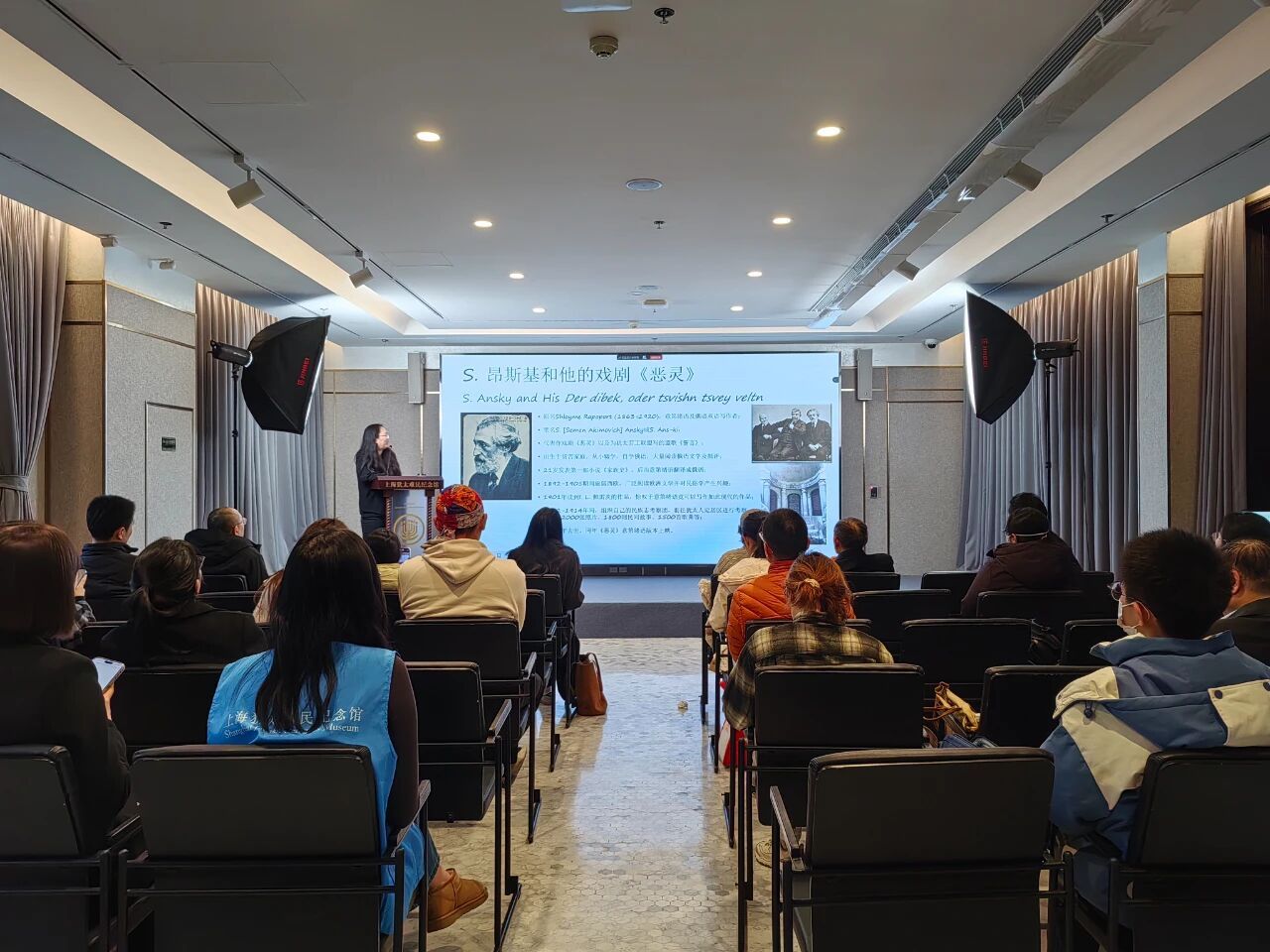
Bao Anruo further explained that the “dybbuk” tradition is rooted in Eastern European Ashkenazi Jewish culture, referring to the folk belief of a sinful soul attaching itself to a living person to voice its traumas. This cultural motif has had far-reaching influence, permeating contemporary popular culture, such as the Coen Brothers' film A Serious Man and a range of horror genre works, demonstrating the enduring vitality of ancient traditions in modern narratives.
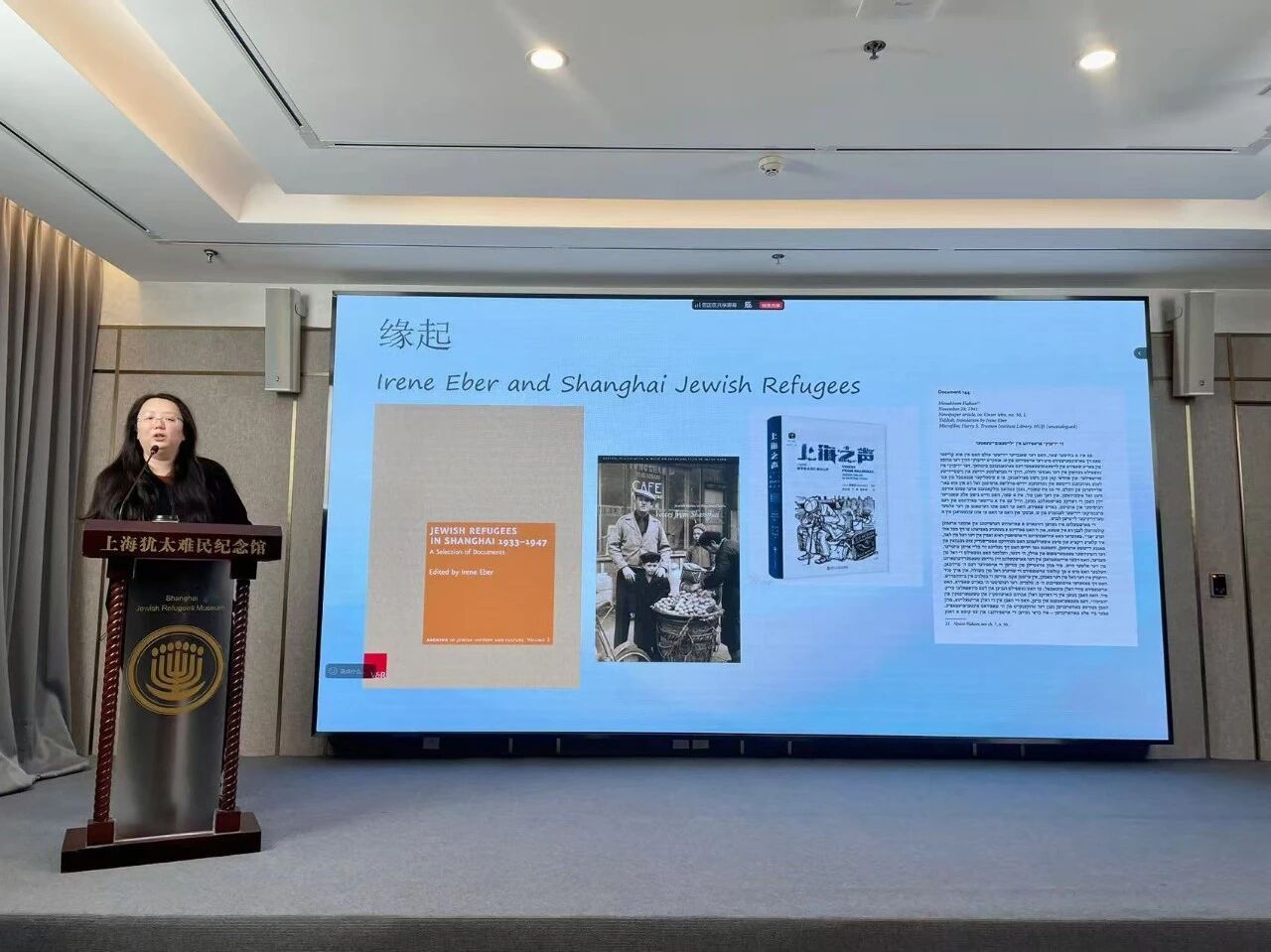
The most captivating part of the lecture was the reconstruction of the 1941 Shanghai performance of The Dybbuk within the Jewish refugee community. Bao Anruo first depicted the cultural life of the refugees in Shanghai at that time: despite extreme material scarcity and hardship, theater remained a crucial means for them to temporarily escape reality and sustain a spiritual community. Refugee theater troupes often made do with limited resources, performing in cramped venues with simple costumes and props, relying on whatever scripts were available or creating their own.
It was under such conditions that “The Dybbuk” was staged in Shanghai. Although the lead roles were played by professional actors of some repute within the Eastern European Jewish community, the overall cast varied in skill, and their understanding of the roles differed. Notably, some German Jewish participants in the performance did not speak Yiddish fluently; they strove to mimic the pronunciation, but their stilted intonation drew criticism from some audience members at the time. While the performance may not have been flawless or caused a sensation, this historical episode itself holds great symbolic significance: it testifies to the exiled community's tenacious efforts to preserve and perpetuate their own culture under extreme adversity. It also allowed the “dybbuk”—this complex symbol expressing trauma and diasporic experience—to find a unique site of resonance in Shanghai, far in the East.
During the subsequent interactive session, the presenter and the audience engaged in in-depth discussions on topics such as the similarities and differences between Hebrew and Yiddish, the concept of possession in Jewish culture, the Chinese translation treatment of the term “dybbuk” and the current state of Yiddish literature translation in China. After the lecture, Bao Anruo also held preliminary exchanges with staff from the Shanghai Jewish Refugees Museum regarding the sorting and research of the museum's Yiddish document collection, laying the groundwork for future museum-university cooperation.
The entire lecture functioned like a meticulously curated academic tour, clearly outlining the historical trajectory of Yiddish language, literature, and culture. Furthermore, through the transnational journey of a single play, it vividly presented the material hardships and spiritual resilience of Jewish refugees in Shanghai. It reminds us that the vitality of culture resides not only within canonical texts but also in the resilient practices of communities creating meaning and transmitting memory amidst displacement and crisis.
This article is reposted from the Center for Chinese Discourse and World Literature Studies.
 Contact Us
 Become a Volunteer





 021-55133186
 info@shjews.com
 62 Changyang Road, Hongkou District