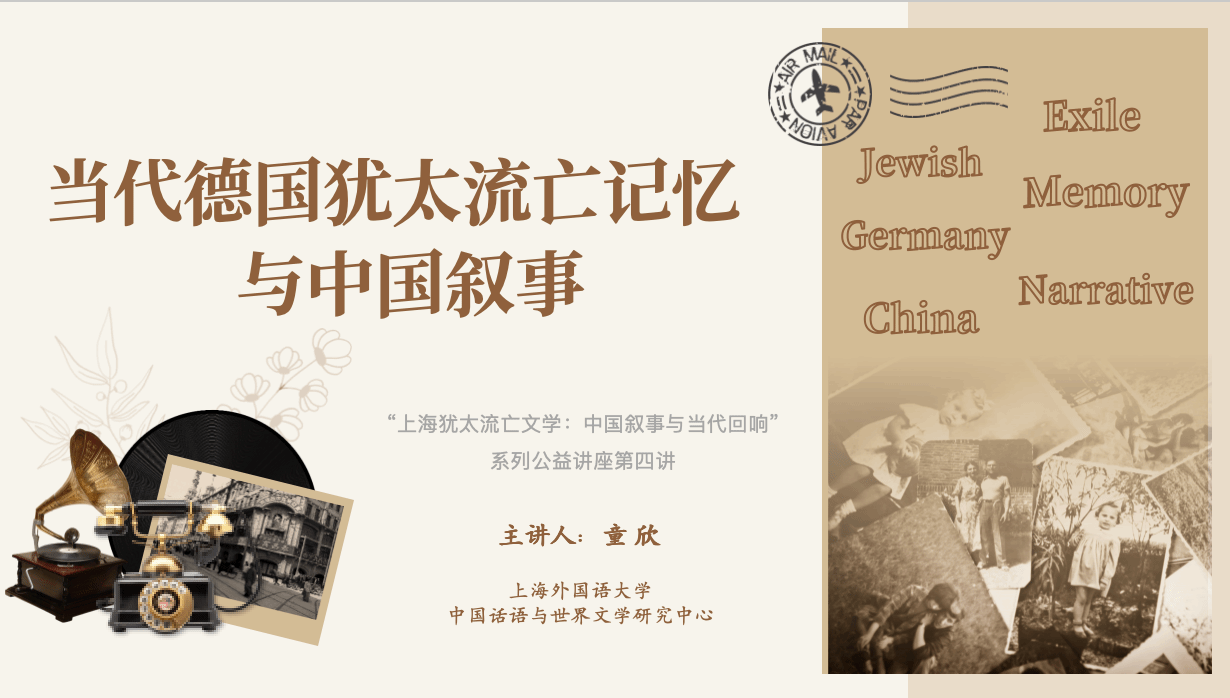
On December 9, the public lecture series “Jewish Exile Literature in Shanghai: Chinese Narratives and Contemporary Echoes,” jointly hosted by the Research Center for Chinese Discourse and World Literature at Shanghai International Studies University (SISU), the Shanghai Jewish Refugees Museum, and Shanghai Academy of Global Governance and Area Studies, welcomed its fourth session: “Jewish Exile Memory and Chinese Narratives in Contemporary Germany.” The lecture was delivered by Dr. Tong Xin, Assistant Research Professor at the SISU Research Center for Chinese Discourse and World Literature.
Framed around the theme of memory, the lecture examined how German society has reshaped—through multimedia—the “China chapter” of German-speaking Jewish exiles who sought shelter in China. The event drew a diverse audience of local residents, scholars, and students. At the outset, Tong Xin reflected on the origins of her research and offered a systematic overview of the development of German exile studies from 1930s to the present. She noted that only by returning to Germany’s specific geographical and historical context can we understand—and meaningfully discuss—what “German-Jewish exile memory” entails. Through the efforts of several generations, contemporary German exile studies have evolved in two directions: on the one hand, researchers continue to identify new fields and blind spots within established frameworks—such as long-neglected victim groups, the exile of “ordinary” individuals, the lasting consequences refugee movements leave for host societies, and the exoticized imagery of countries of refuge; on the other hand, scholars have sought to break decisively with earlier traditions that treated exile studies as a self-contained field and extended its initial paradigms indefinitely. Instead, through historical retrospection, the field has gained renewed legitimacy by addressing questions that arise from lived experience and contemporary concerns.
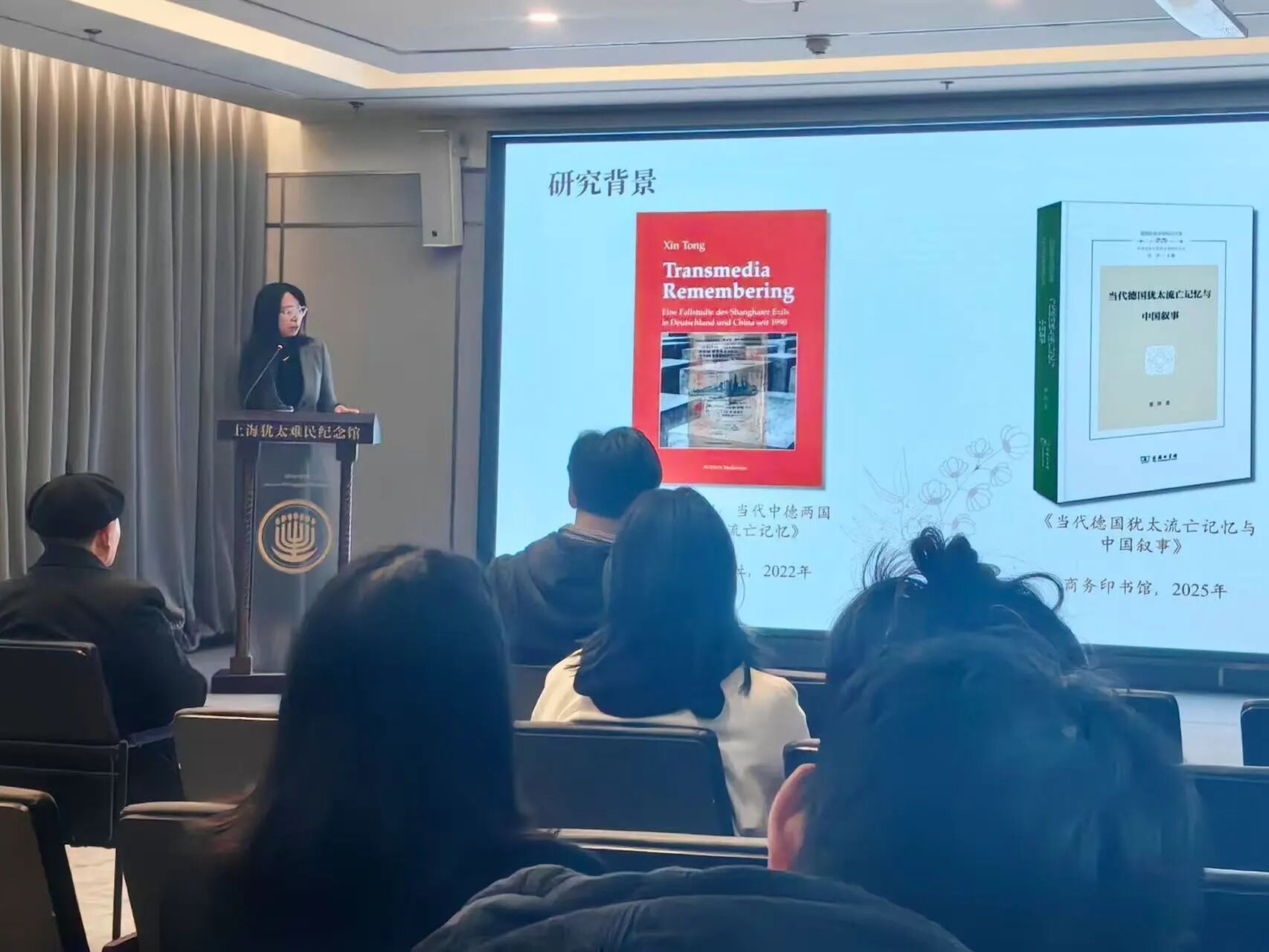
In the second part of the lecture, Tong Xin explored three dimensions: (1) German-Jewish exile literary memory and writing on China; (2) German-Jewish exile visual memory and images of China; and (3) German-Jewish exile musical memory and stories of China. Drawing on literature, films, exhibitions, music and other historical sources, alongside contemporary texts, she entered the spiritual world of exile communities to examine the richness of Chinese narratives and the complexity of the historical spaces in which they emerged.
She argued that newspapers and periodicals founded by German-speaking Jewish refugees in China served both as practical guides for building a new life and as sources of emotional and intellectual solace. Texts published in these outlets variously discussed Chinese literature and history, mapped Chinese urban spaces, compared culinary cultures in China and the West, or recorded the lives of street children—offering, from multiple angles, the refugees’ observations, impressions, and memories of exile, and reflecting both the many faces of China and the everyday realities of the society.
As important visual complements to exile literary memory and writing on China, the German film Exile Shanghai (premiered in 1997 at the Berlin International Film Festival) and the exhibition Leben im Wartesaal: Exil in Shanghai 1938-1947( Life in the Waiting Room: Exile Shanghai 1938–1947) at the Jüdisches Museum Berlin (Jewish Museum Berlin) were highlighted as milestones. Together, these two “visual memory texts” helped spark and shape public discourse and social thought in Germany at the time around the topic of Jewish exile to China. They also revealed the subtle and often ambivalent social psychology and historical emotions among German intellectual circles and the wider public, while conveying images of Shanghai associated with “Old Shanghai” and “modu” (often translated as a “magical metropolis”).
Tong Xin also discussed the “Wolf Brothers,” exile musicians who came to China and were known as “Sons of Hamburg.” During their years in Shanghai, they performed classic German songs such as An der Eck steiht’n Jung mit’n Tüdelband. The China-related stories and songs of exile they created later returned—both to their hometown and to Shanghai in the 1990s—becoming part of subsequent commemorative memory texts and adding new layers of meaning to exile memory.
Through this rich body of historical documentation and contemporary memory texts, the lecture unpacked Chinese narratives within contemporary German Jewish exile memory and explored the humanistic landscape of wartime Shanghai as a “Noah’s Ark,” resonating strongly with the audience. During the Q&A, participants engaged in in-depth discussion with the speaker on topics including Germany’s reflection on historical guilt, shared resilience of Chinese and Jewish communities in times of hardship, and the contemporary value of urban spatial memory. As the venue and a key “site of memory,” the Shanghai Jewish Refugees Museum and its exhibitions also drew sustained attention, allowing participants to experience—firsthand—the tangible warmth of history.
Research Profile
Tong Xin has long focused on memory studies, exile studies, and migration studies, and has published two academic monographs:
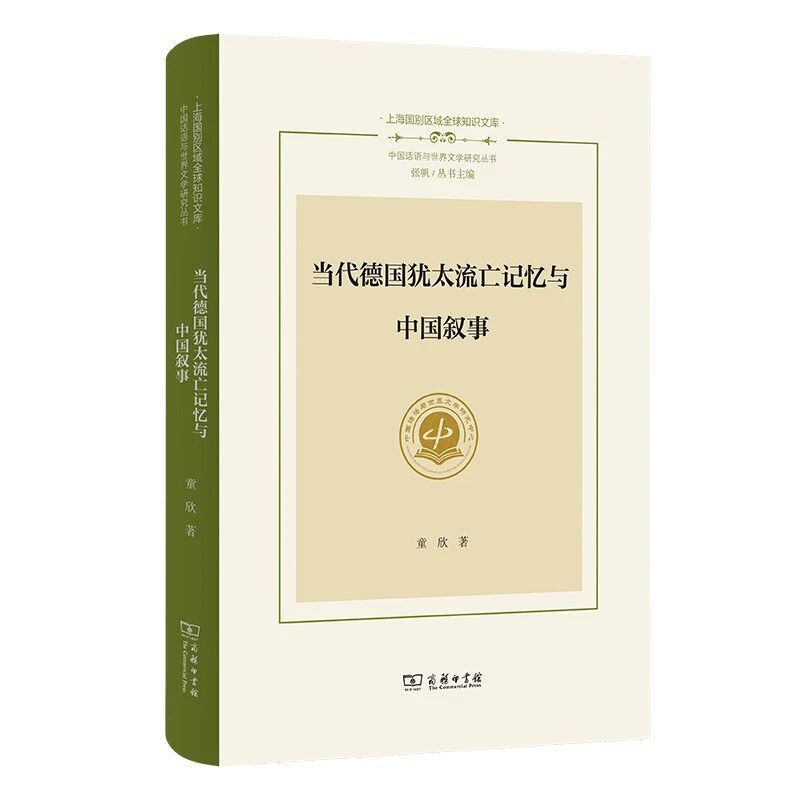
1. Jewish Exile Memory and Chinese Narratives in Contemporary Germany (Beijing: The Commercial Press, 2025)
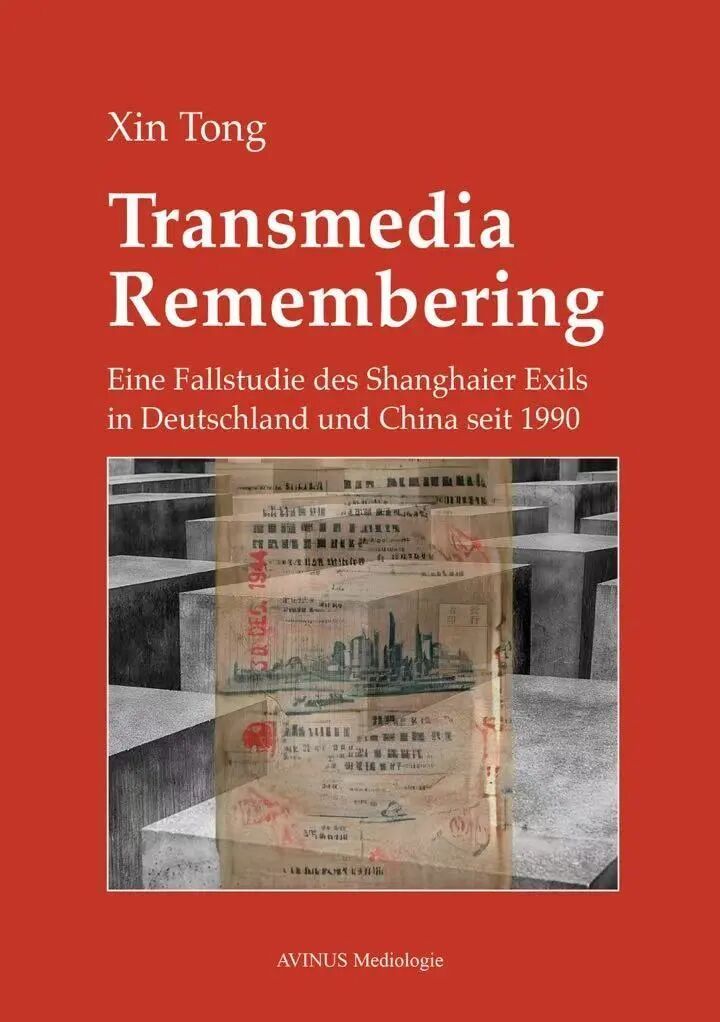
2. Transmedia Remembering: Eine Fallstudie des Shanghaier Exils in Deutschland und China seit 1990
(Transmedia Remembering: A Case Study of Shanghai Exile Memory in Germany and China since 1990, AVINUS Verlag, Germany, 2022)
This article is reposted from the Center for Chinese Discourse and World Literature Studies.
 Contact Us
 Become a Volunteer




 021-55133186
 info@shjews.com
 62 Changyang Road, Hongkou District