For Brian Fine, the city of Shanghai and the Shanghai Jewish Refugees Museum are a haven that preserves his family’s memories of seeking refuge, fertile ground for a new chapter in his personal life, and a thread that connects three profoundly meaningful weddings in the city.
In November 2025, Brian, who had once worked as a teacher in Shanghai, received a special invitation from across the ocean. It was a wedding invitation sent by a Chinese student he had taught in Shanghai. This thin, handwritten invitation brought Brian back to Shanghai once again – to the land where he had left the imprint of his life and work, and which also carries the lifeblood of his family.
{ 1945 }
His grandparents were married in Shanghai
On 30 December, the eve of the wedding, Brian made a special trip to the Shanghai Jewish Refugees Museum, visiting for the first time in six years. For him, Shanghai has never been merely a city where he once lived and worked; it is also the only refuge his ancestors could find amid the smoke of war. Standing before the map engraved on the wall, depicting the routes taken by European Jewish refugees to Shanghai, Brian once again vividly felt the journey his grandmother, Nelly Brandt, had undertaken by train to seek refuge in the city—a journey far more arduous and distant than he had ever imagined. “Grandma only ever mentioned that she had travelled by train through parts of Moscow and Mongolia,” Brian recalled. He had never realized that this escape had taken her across the vast Siberian plains, passing through Yaroslavl, Yekaterinburg, Tyumen, Irkutsk and Manzhouli, and many other places—a route steeped in the suffering of displacement.
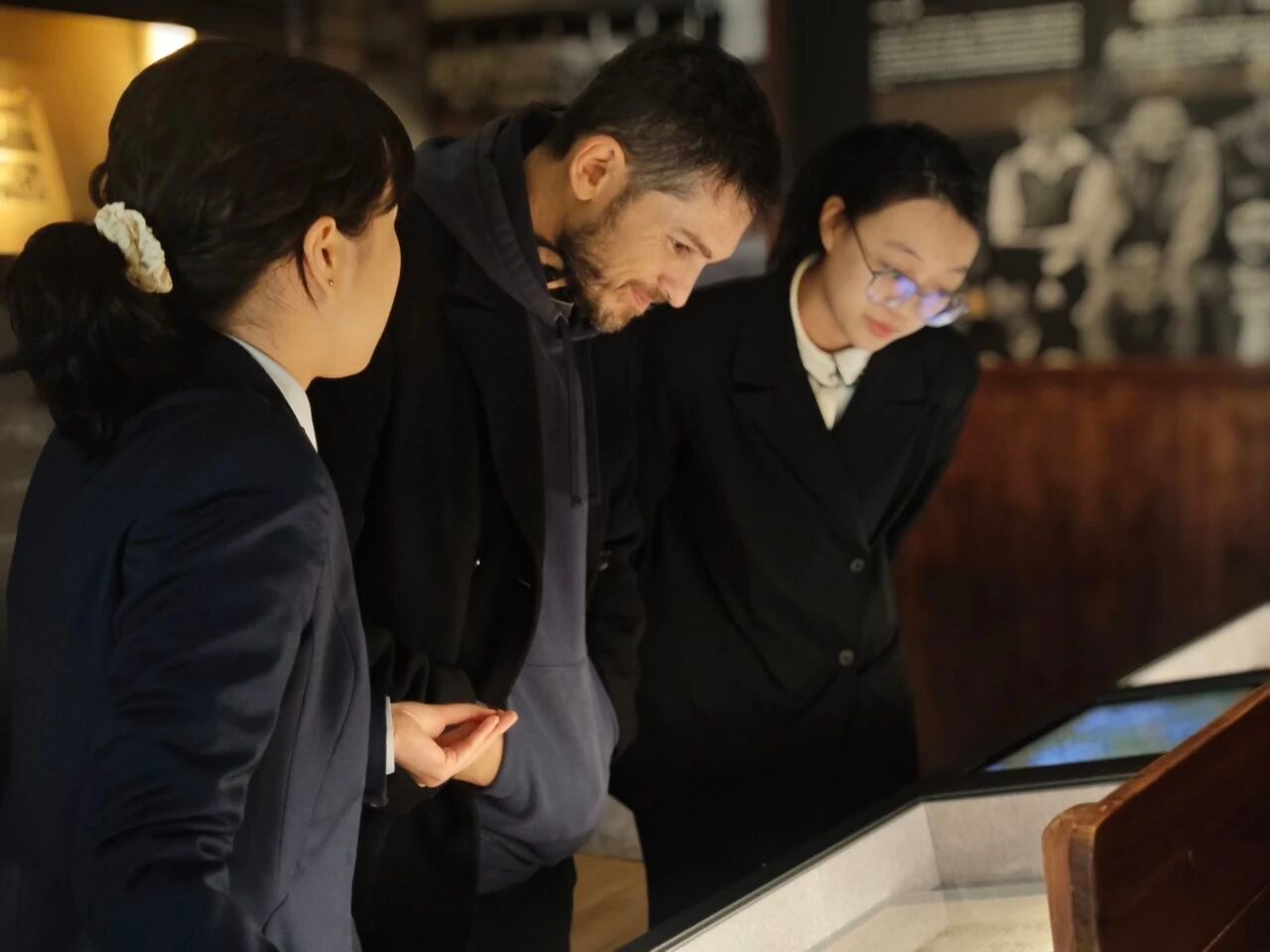
Brain (centre) visiting the museum
“But we were undoubtedly very fortunate." Fortunate that his grandmother escaped persecution by Nazi Germany, and fortunate that she eventually reached Shanghai and began a whole new life. In the exhibition hall showcasing the lives of Jewish refugee families, Brian showed the staff a treasured photograph of his grandparents’ wedding in Shanghai, recounting the story of that 1945 wedding. His grandfather was an American soldier, and they fell in love at first sight. According to his grandmother, they held the first wedding in Shanghai’s Jewish community just one month after they met. Dressed in a wedding gown made from parachute fabric, she walked down the aisle hand in hand with her husband.
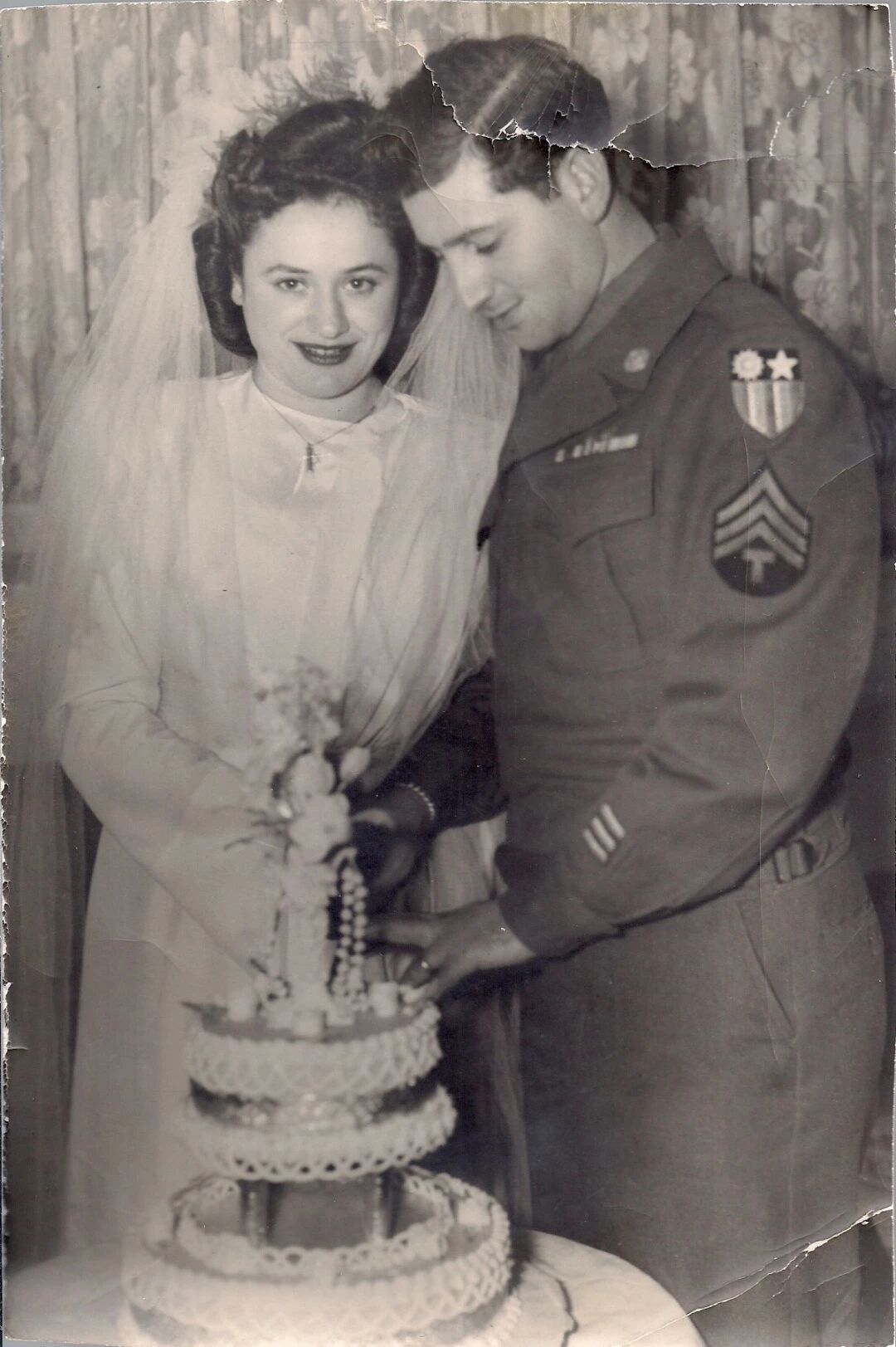
Brain's grandmother Nelly and grandfather Max
Soon after their marriage, his grandparents and their family left Shanghai to settle in the United States, and Brian’s father was born there. “I look very much like my grandfather, and my brother’s daughter is almost the spitting image of my grandmother,” Brian said. For the entire family, those years of refuge in Shanghai have never faded; they are deeply etched into their bloodlines and familial bonds. “Without China, without Shanghai, there would be no us.”
{ 2012 }
Holding a wedding ceremony with his wife at the Ohel Moishe Synagogue
When Brian met his wife in China, the couple did not hesitate to choose the Ohel Moishe Synagogue in the museum as their wedding ceremony venue. In 2012, surrounded by the blessings of numerous Jewish refugees, their descendants and friends, Brian and his wife exchanged vows to spend their lives together in the very neighbourhood where his grandmother had once lived and the synagogue where she had worshipped. During their time in Shanghai, Brian and his wife often visited the museum with their two young children, telling them about this history and the stories of their great-grandparents, and searching for familiar names on the Wall of Names…
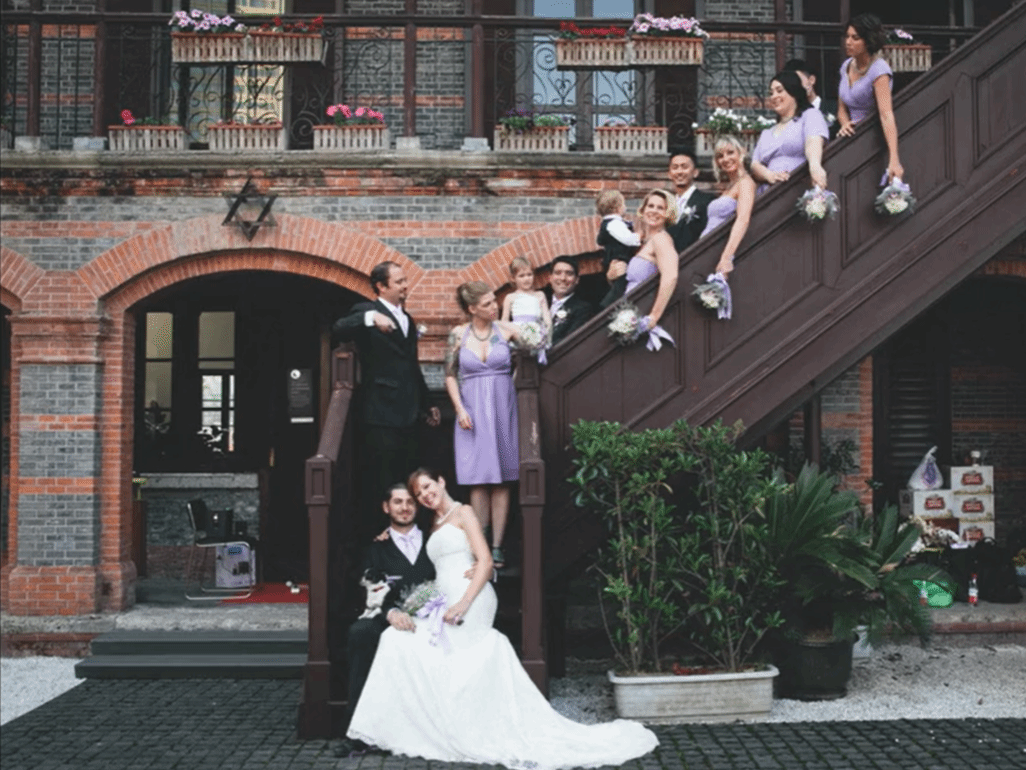
Brain and his wife (front row) were married at Ohel Moshe Synagogue in 2012
In 2019, based on Brian’s personal recollections and historical records, a short film was produced about his grandmother Nelly’s experiences as a refugee in Shanghai. It is still screened in the exhibition hall. A few years ago, Brian and his family moved abroad. “But our two children, who spent their childhood in Shanghai, still often ask us if they are Chinese,” Brian said with a smile. “In our family, the answer has always been yes.”
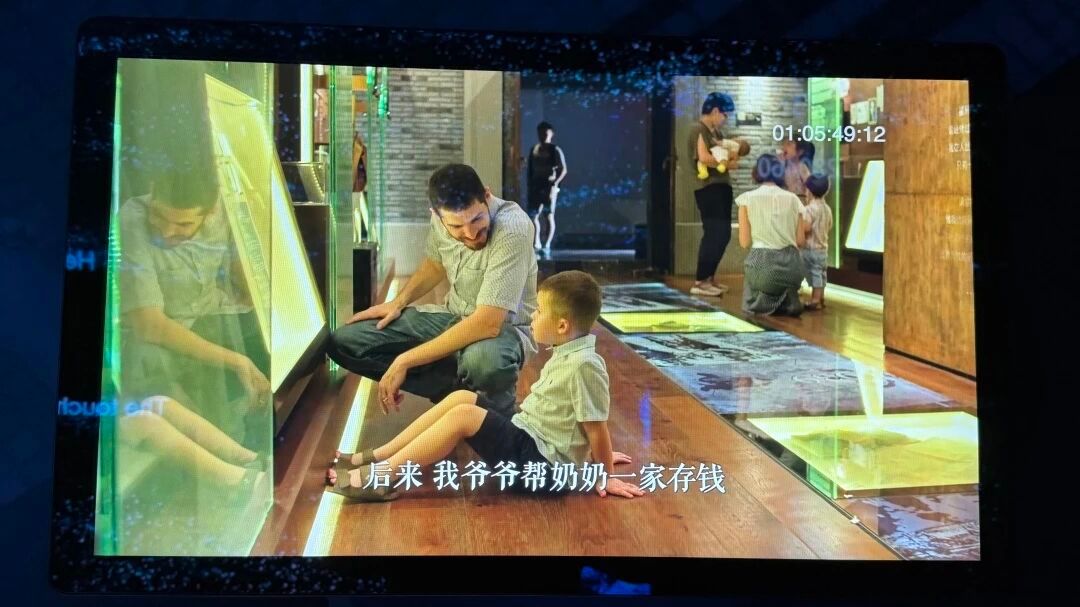
A short video within the museum recounting the story of Nelly
{ 2025 }
Coming to Shanghai to witness the students’ sweet romance
Brian once worked as a lecturer at the Cambridge International Centre of Shanghai Normal University, teaching language and literature. With his gentle nature, he was deeply loved by his students. He was not only an excellent teacher but also a close friend they could easily get along with. For Brian, who has been deeply influenced by Chinese culture, attending this Shanghai wedding as a mentor feels like the continuation of a timeless family tradition. The bond between his family and Shanghai is taking root and flourishing in a new way on this land that once offered his family shelter.
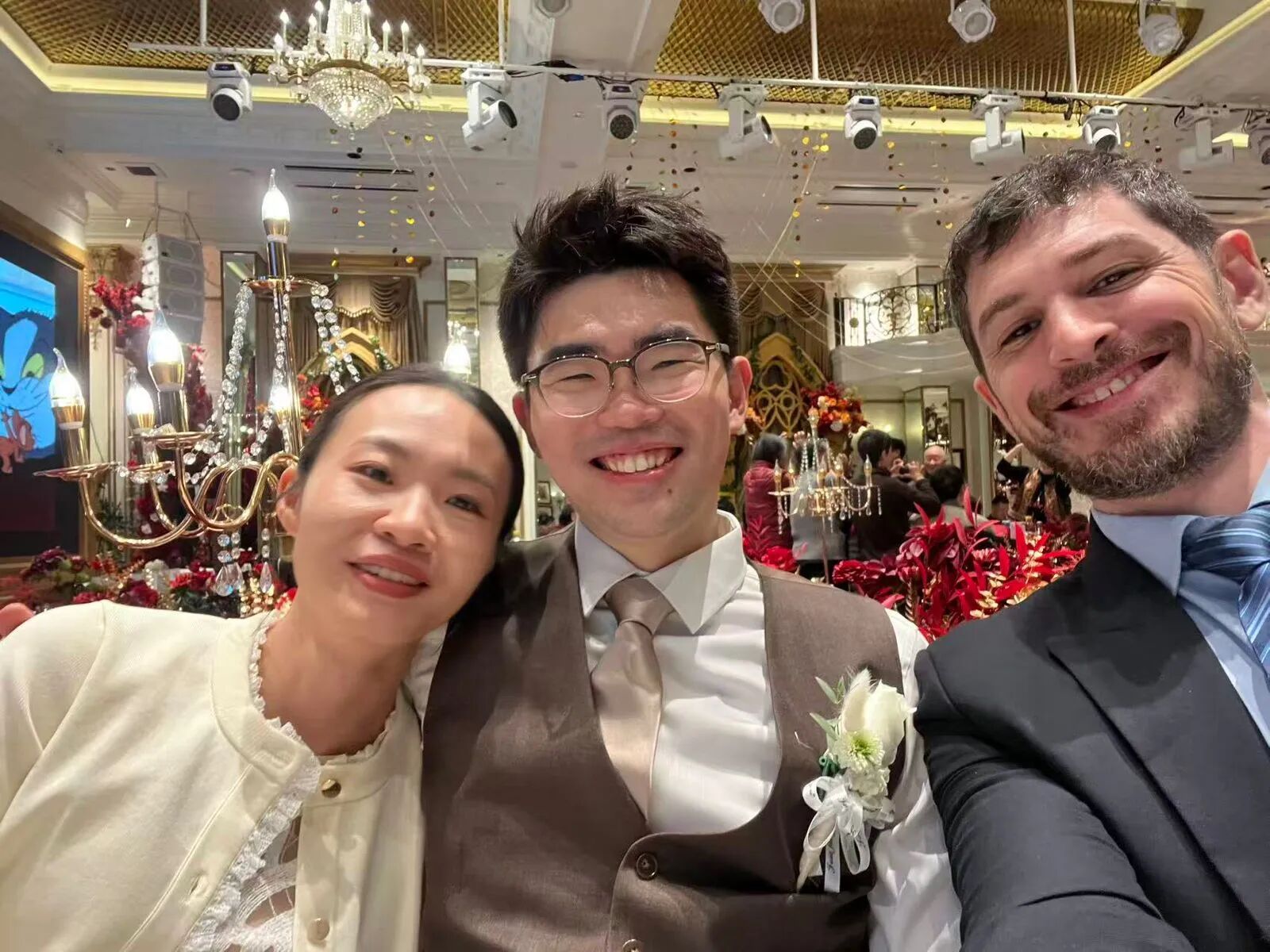
At the end of 2025, Brain attended the wedding of two students in Shanghai
This return to his former home marks Brian’s first visit since the museum’s expansion in 2020. The exhibition halls now feature many new personal accounts and family histories shared by Jewish refugees and their descendants from around the world. “I find it easy to relate to these stories,”said Brian. What the city of Shanghai has given them is not merely the continuation of their bloodline, but also a deep-seated sense of kinship—an emotion that binds every refugee and descendant, and connects them to their deepest affection for Shanghai and China.
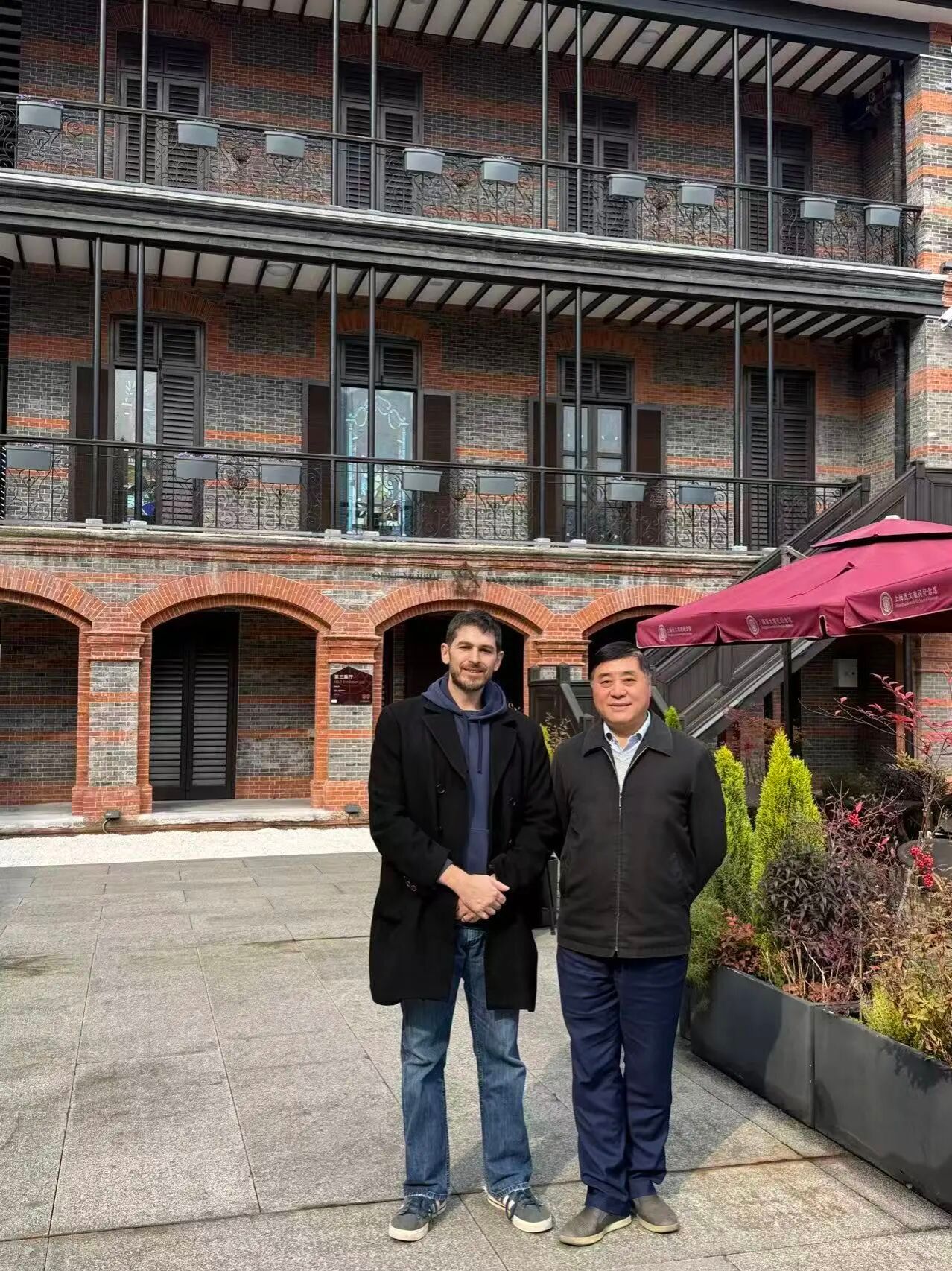
Brain and Director Chen
Stories of Refuge
The Brandt family: From Siberia to Shanghai
In July 1938, under the shadow of anti-Semitism, Nelly’s father, Max Brandt, was arrested by the Nazis and imprisoned in the Buchenwald concentration camp. Three months later, Max was released but ordered to leave Germany immediately. As the only city in the world at that time that did not require entry visas and still accepted Jews, Shanghai became the Brandt family’s final refuge.
In August 1939, their mother, Julie, took Nelly, her older sister Lilly, and her brothers Heinz and David to join their father in Shanghai. As Lilly later recalled, during their hasty departure, their passports were unfortunately lost. By the time they were finally recovered, the visas had expired, forcing them to apply for new visas in a rush while travelling by train to Berlin. On 28 August, the very day their second visa was approved—which happened to be Nelly’s birthday—they were ordered to leave immediately and boarded a train bound for Moscow. They later learned that they were the only family to obtain visas and successfully leave Germany that day.
After travelling by train across Siberia, the family of five arrived in Harbin, planning to continue their journey southwards. As their mother, Julie, had unfortunately contracted pneumonia during the journey, Nelly was obliged to remain in Harbin to care for her whilst Lilly and her two brothers travelled ahead to Shanghai. Julie and Nelly arrived three weeks later, once Julie had recovered. In September 1940, Max, who had been waiting in Shanghai for some time, was finally reunited with his family.
Although they had escaped the Nazis, life in Shanghai remained hard for the Brandt family. In 1943, they were forced to move into the restricted residential area for stateless refugees established by the Japanese occupation authorities in Hongkou, where supplies were scarce and disease was rife. Max and his son Heinz were both compelled to work in sewer cleaning within the zone. Heinz sustained a foot injury, which led to a systemic infection, and he tragically passed away at the age of eighteen.
A turning point came in 1945. Nelly, now a young woman, met an American soldier, Max Fine, in Shanghai. Max helped Nelly find a job and assisted her in saving money to send her family to the United States. They married at the Shanghai Richards’ Hotel and Restaurant (later the Astor House Hotel, now the site of the China Securities Museum). After the war, Nelly and her husband settled in Rhode Island with the rest of their family, and the couple raised five children there.
 Contact Us
 Become a Volunteer




 021-55133186
 info@shjews.com
 62 Changyang Road, Hongkou District