On 22 January, Yoni Shafer, an American exchange student in Shanghai, made a special trip to visit the Shanghai Jewish Refugees Museum on a friend's recommendation. Yoni’s ancestors fled Germany for Shanghai to seek refuge during World War II and lived here for nine years; his grandmother, Edith Oelsner, was born in the city. Yoni also hoped to see the Shanghai streets and alleyways his grandmother had spoken of, and to experience firsthand the land where his ancestors once lived.
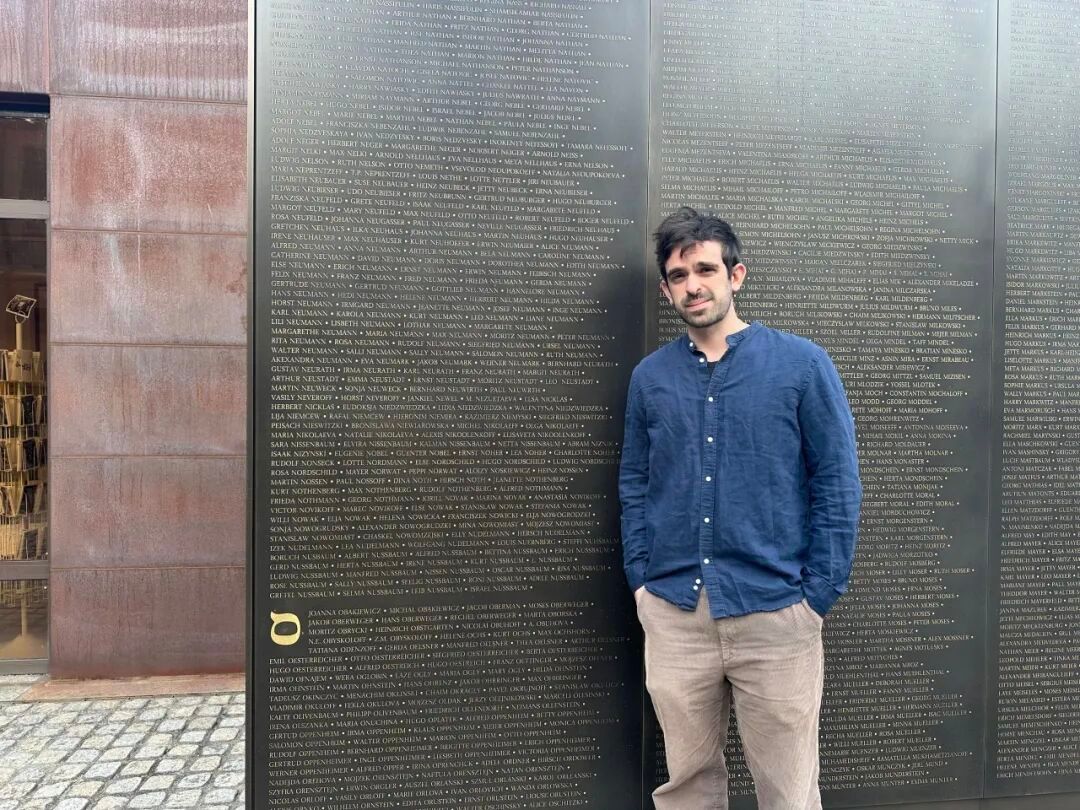
Yoni poses in front of the Wall of Names marked with his grandmother Edith’s name
In the museum’s display hall, Yoni viewed the exhibits with intense focus. While listening intently to the guide’s explanations, he took notes on details relevant to his ancestors’ experiences, occasionally pausing to share the harrowing hardships of his grandmother’s family endured as refugees. According to Yoni, after his ancestors arrived in Shanghai, they rented a tiny shop on Zhoushan Road and made a living by selling tobacco. The tobacco shop, less than ten square meters, was simply divided into two parts: one half for the tobacco business, and the other half served as living quarters for Edith and her parents. “By day, this was a tobacco shop; by night, the whole family would sleep on the shop floor.”
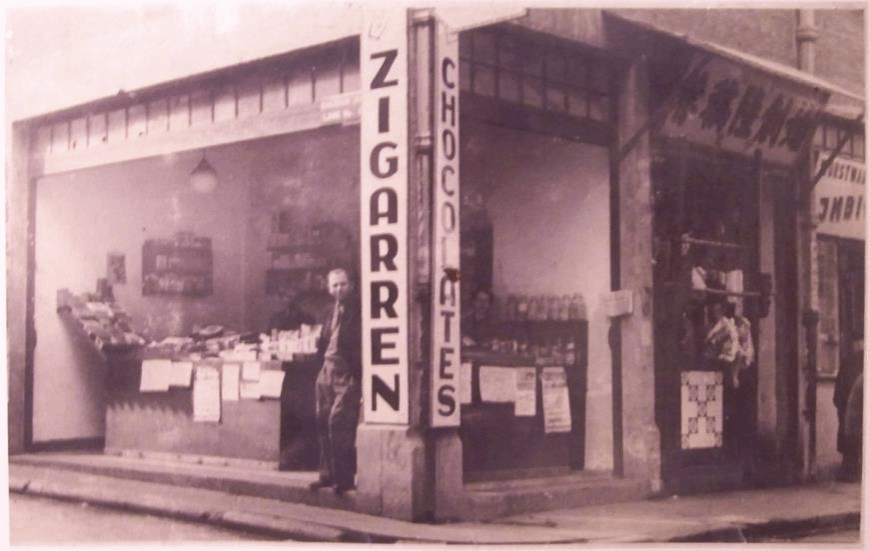
Manfred, Edith’s father, standing at the tobacco shop
On the second floor of the museum, a particular poster caught his eye. Emblazoned on it were words he knew all too well: Zigarren-Oelsner—Oelsner being the surname of his grandmother’s family. It was a poster in German. After a close look, Yoni confirmed that the upper half was indeed an advertisement for the tobacco shop once run by his grandmother’s family. It clearly stated the shop’s name and address, 159 Zhoushan Road, and even helpfully noted that it was "near the market". The lower half featured a performance announcement from the Association of European Jewish Artists.
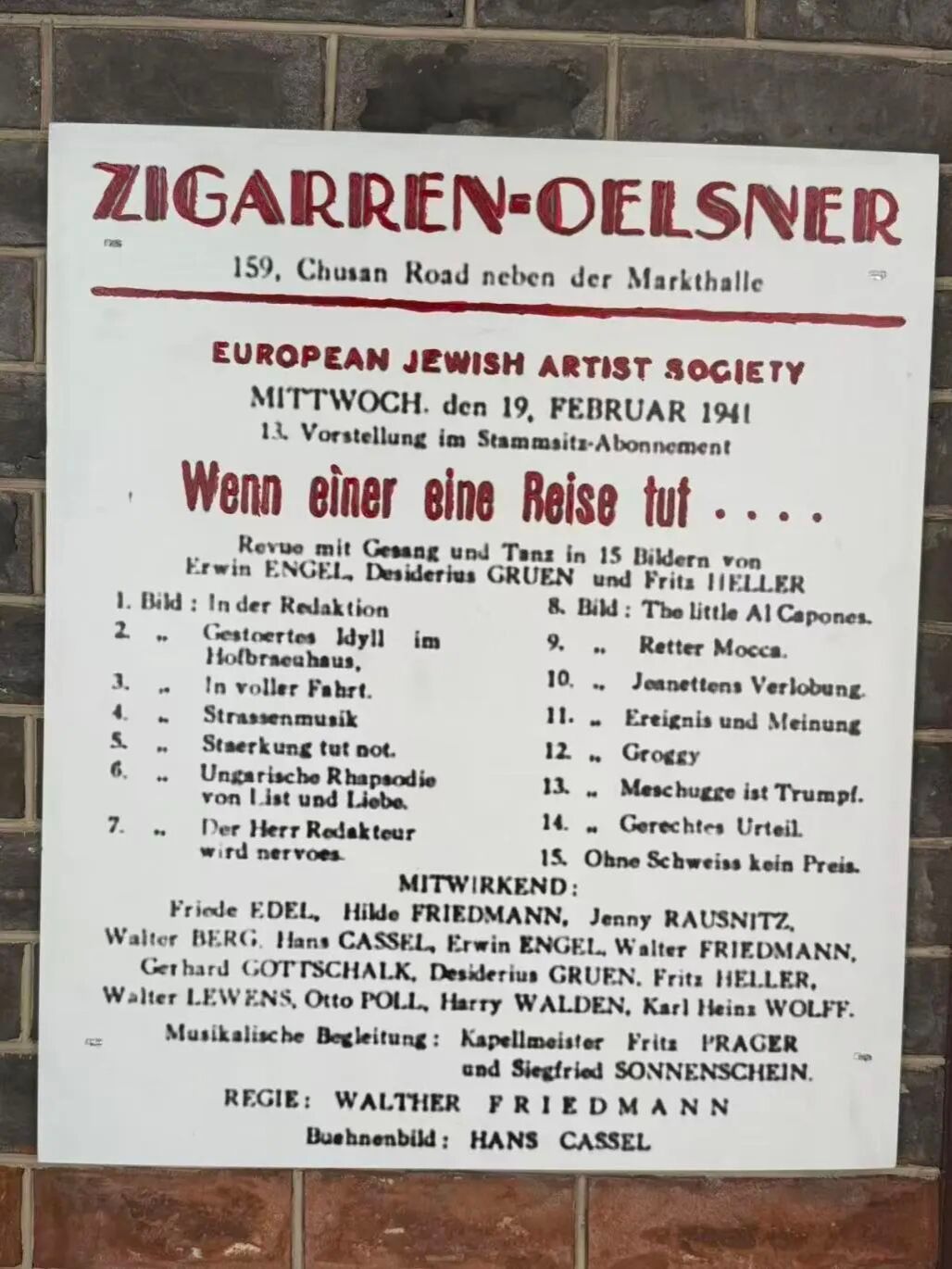
The poster in the museum
Yoni was deeply excited upon seeing this poster. He hoped that after the tour, using this poster and the old photographs left by his grandmother as clues, he could visit Zhoushan Road in person to search for the former site of the tobacco shop and witness the small corner of the city where his ancestors had once carved out a life for themselves through self-reliance and indomitable spirit.
Unfortunately, most of the buildings and lane house numbers along Zhoushan Road have been demolished as part of urban renewal projects, making it extremely difficult to pinpoint the exact location of the former 159 Zhoushan Road. Old photographs left by Yoni’s grandmother show that the tobacco shop was on a street corner, while the poster’s ‘near the vegetable market’ note indicates it was close to the Zhoushan Vegetable Market. Putting these clues together, Yoni eventually stopped in front of a corner building beside Lane 157, Zhoushan Road, and took a photo with the building.
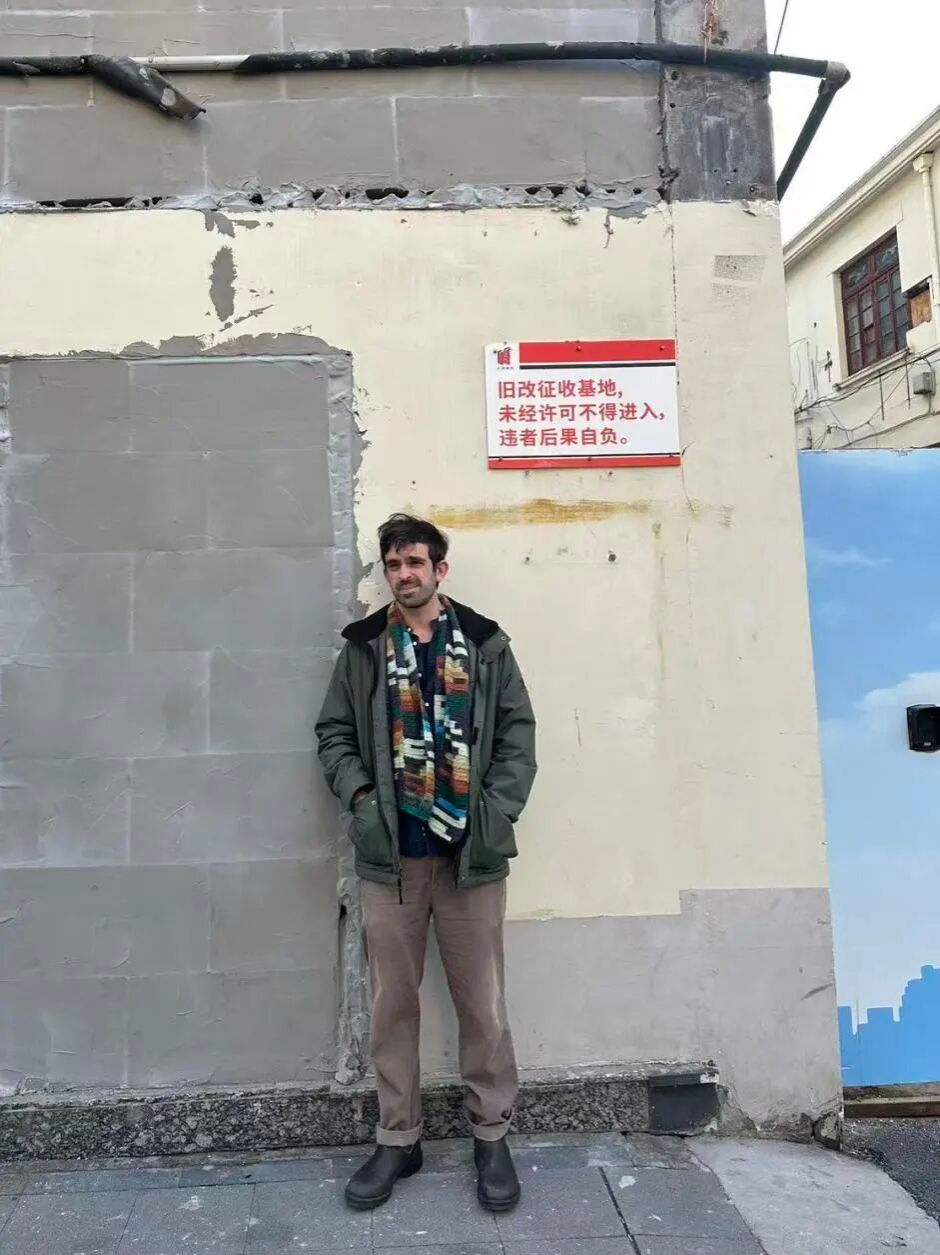
“As a descendant of Jewish refugees, today’s experience has touched me deeply,” Yoni remarked with genuine emotion as he left the museum. “I am deeply grateful that this museum has been established and has grown to its current scale. It is precisely because of this place that I have been able to delve deeper into the Jewish history rooted in this city, and gain a clearer understanding of my ancestors’ past. For this reason, I am now seriously considering how best to share this history with a wider audience and ensure it is passed down for future generations.”
Story of Refuge in Shanghai
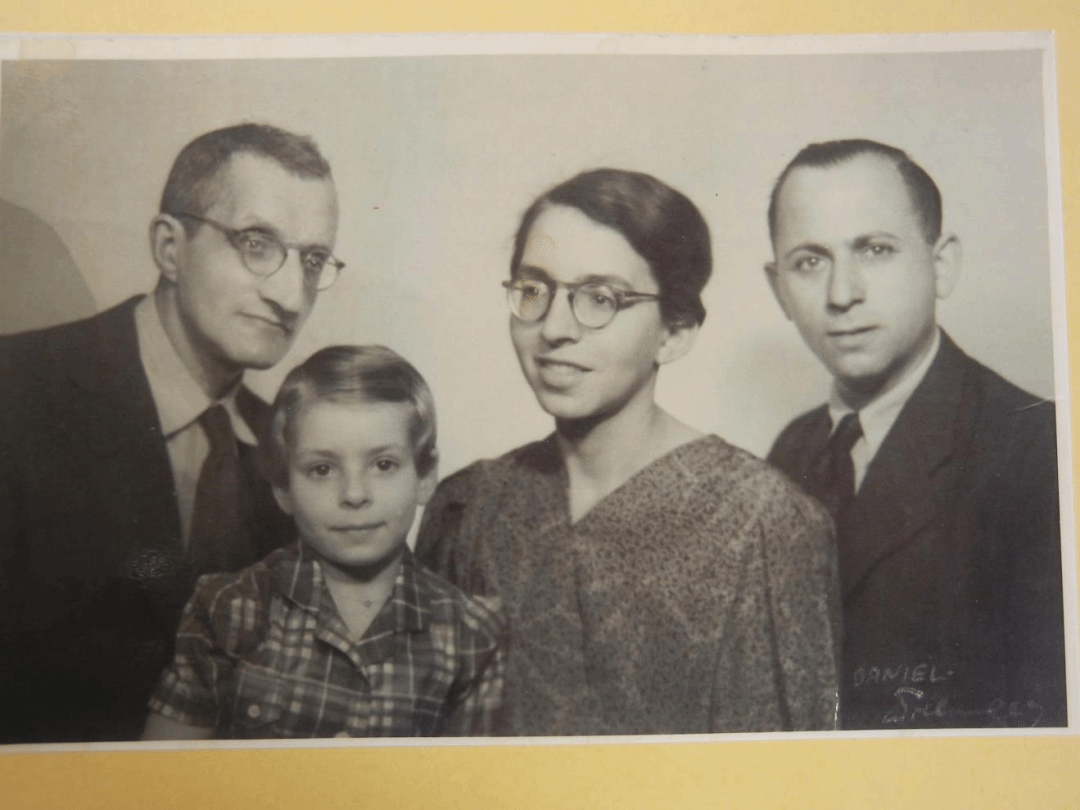
Edith (second from left) with her grandfather Max (first from left) and parents
In June 1938, Manfred Oelsner and Gerda Oelsner were married in Germany. However, in November of the same year, Kristallnacht broke out, and Nazi persecution followed in quick succession. Manfred and his father-in-law, Max Kuba, were arrested and sent to the Sachsenhausen concentration camp. They narrowly secured their release thanks to the help of a friend of Gerda’s brother-in-law who worked at the Argentine consulate.
Thereafter, Manfred spent every day in Berlin searching for a way to escape Europe, and eventually obtained three ship tickets to Shanghai through a relief organization. In May 1939, the family of three boarded the steamship ‘Conte Verde’ to flee Europe, arriving in Shanghai on 4 June. Initially housed in a refugee relief center, Max and Manfred earned a living by hauling luggage with handcarts. Later, Max remained at the relief center, while Manfred and his wife rented a shop of about 9 square meters on Zhoushan Road to run a tobacco shop. To maximize their earnings, the shop was often open from 6am until 1:30am the following morning.
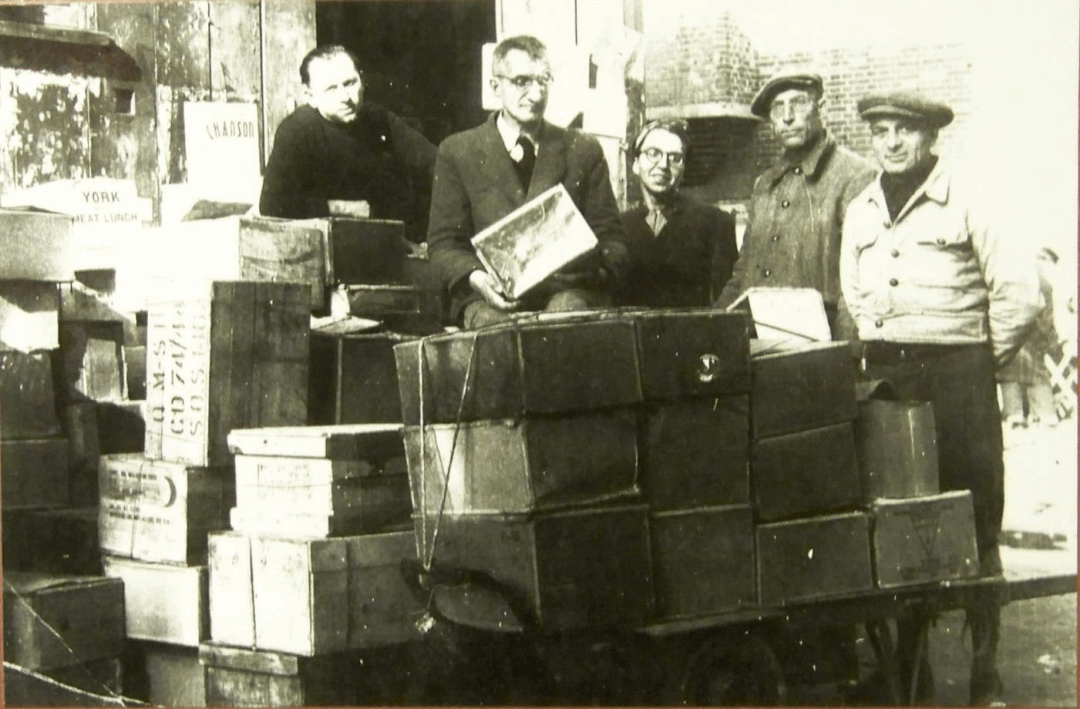
Manfred (first from left), Max (second from left) and Gerda (third from left) in Shanghai
On 30 January 1941, Manfred and Gerda’s daughter Edith was born. She had no toys during her childhood and could only play in her father’s tobacco shop. The family of three huddled together in this tiny shop, enduring a lack of running water and heating. After the war, Edith and her parents immigrated to America in 1948, sponsored by relatives and friends. Before their departure, Max, who was unable to accompany them due to his Polish heritage, wrote a heartfelt message on a birthday card for his granddaughter Edith, who was about to turn seven.
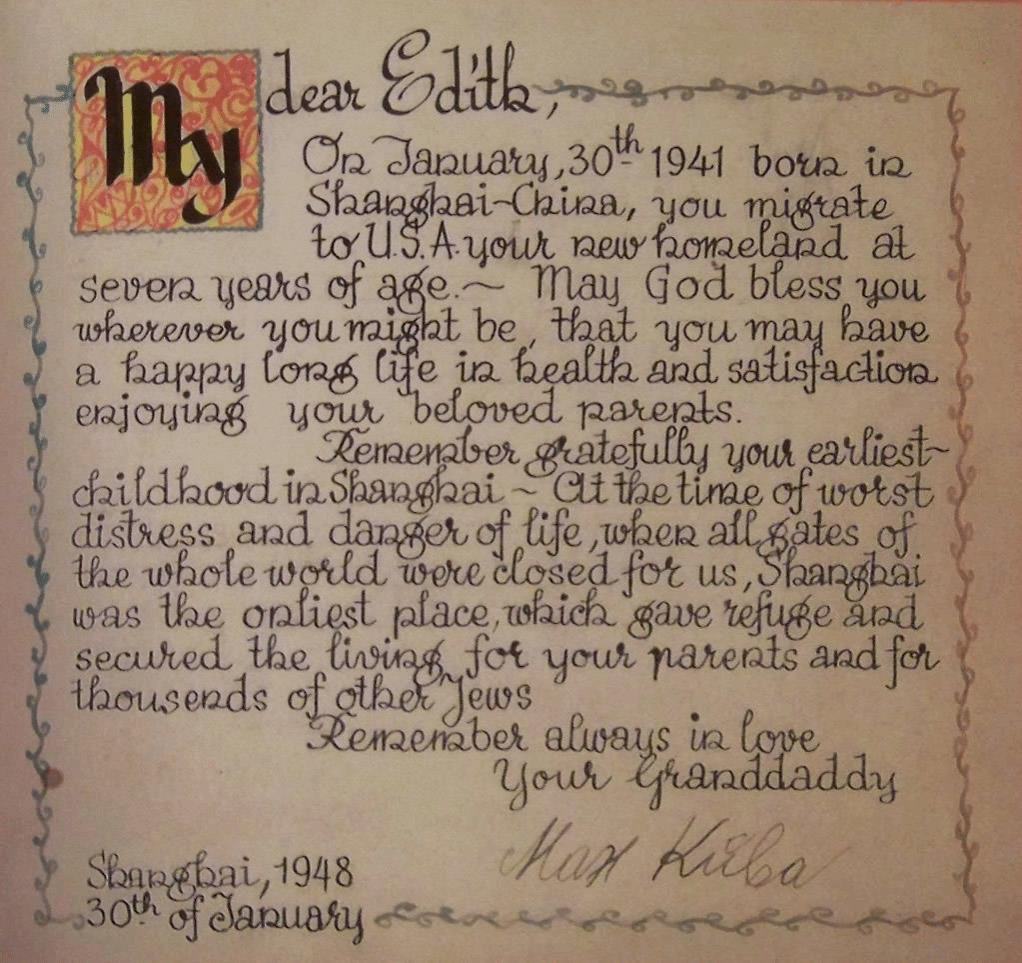
While Edith and her parents settled in the United States, Max was forced to return to a displaced persons camp in Germany. To secure Max’s release, Manfred, Gerda and other relatives and friends wrote repeatedly to the US government pleading for assistance. In 1952, Max was finally granted entry to the United States and reunited with his family. Edith and her family then settled in Milwaukee.
As the years passed, Edith never forgot her experience. She wrote the book Shanghai Deliverance: A Holocaust Survival Story, chronicling her family’s journey to safety, and joined the Speakers Bureau of the US Holocaust Education Resource Center. For 15 years, she shared this history with the public, helping more people understand the cruelty of war and the hardships faced by refugees in their struggle for survival.
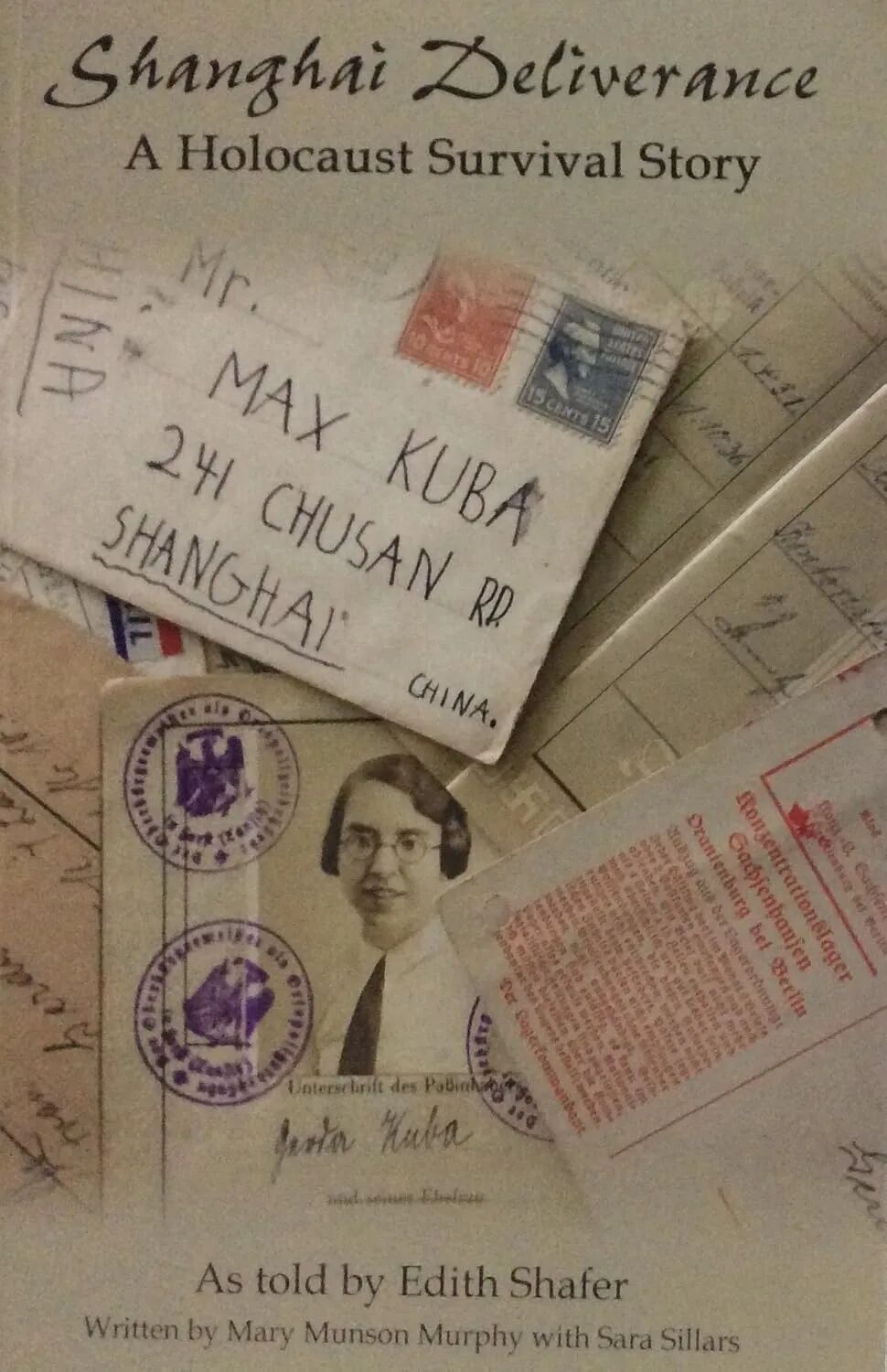
Shanghai Deliverance: A Holocaust Survival Story
On 9 September 2024, Edith passed away at the age of 83. To honour her wishes, her family established a foundation in her name to provide ongoing support for Holocaust education projects, ensuring that this cross-border story of refuge and redemption is remembered forever.
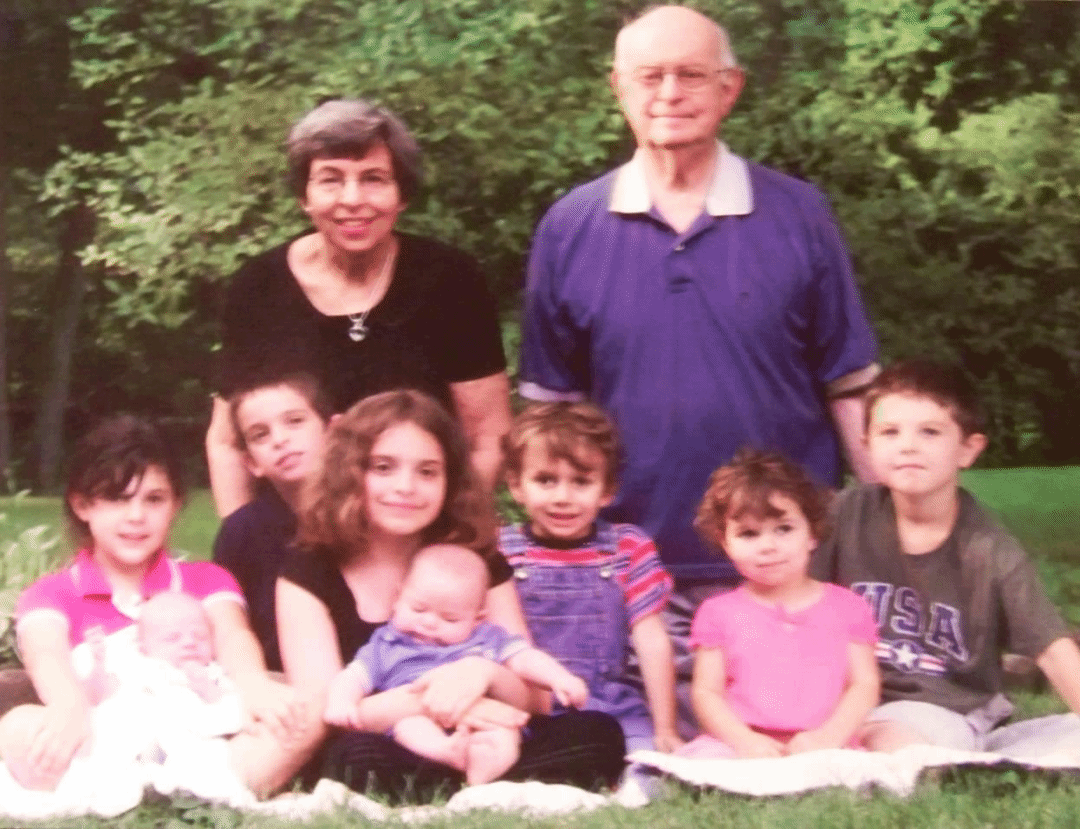
Edith in her later years (first from left in the second row) with her husband and grandchildren
 Contact Us
 Become a Volunteer




 021-55133186
 info@shjews.com
 62 Changyang Road, Hongkou District